
2027 WFEO Hackathon
CHALLENGE 3
Smart, Digital and Data-Driven Transport
Engineer data-driven mobility for safer, more efficient journeys
Submit your solution3,000+ engineers. 41 countries. 9 million annual engagements. One global challenge. Now it's your turn.
Engineering responses to advance SDG 9: Industry, Innovation and Infrastructure
Transport systems generate enormous quantities of data – from traffic sensors and connected vehicles to ticketing systems and satellite positioning – and engineers are increasingly turning that data into safer, more efficient and more resilient mobility. Market estimates vary by scope: the broader AI-in-transportation market is projected to grow from around USD 4.3 billion in 2025 to USD 7.6 billion by 2030, while a narrower analysis focused specifically on generative AI in transportation values that segment at USD 1.2 billion in 2025, rising to USD 2.83 billion by 2030 at a compound annual growth rate of roughly 18–19%. Both estimates point in the same direction: governments and operators are embedding AI into core transport infrastructure at an accelerating pace.
The results are already visible at city scale. In January 2025, Riyadh Metro became the world's longest fully driverless metro network, spanning 176 kilometers and 85 stations across six lines. In Beijing, a deep reinforcement learning-based traffic control system has cut CO2 emissions by 25% during peak hours, while Singapore's adaptive traffic lights have reduced intersection delays by 22%. In Delhi, the Dwarka Expressway became India's first AI-powered smart highway in 2025, using sensors and cameras to detect incidents and manage traffic in real time.
Yet building smart, data-driven transport infrastructure responsibly requires more than deploying sensors and algorithms. It calls for engineering systems that are secure, interoperable, and designed to make mobility better for everyone – not just for those already well served by digital infrastructure.
Submit your solutionThe Challenge
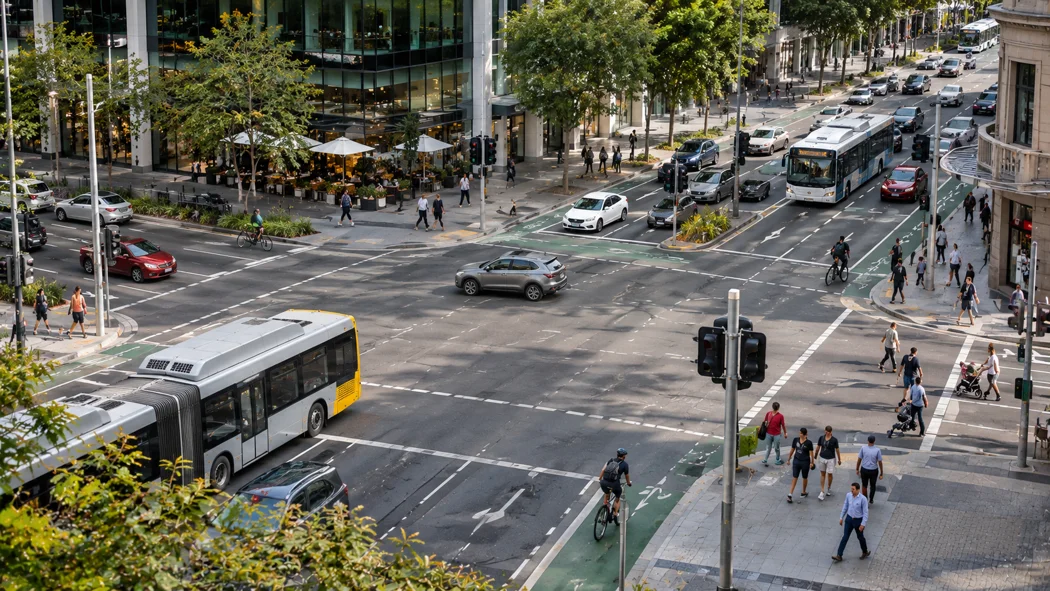
How can digital technologies, data and artificial intelligence make transport systems safer, more efficient and more sustainable – without leaving people, places or operators behind? Explore an inefficiency, safety risk or infrastructure gap in your transport system, and propose engineering solutions that harness data and digital technology to solve it.
Engineering Responses and Outcomes
Engineering across digital and physical infrastructure disciplines is central to building smart, data-driven transport systems.
Computer scientists and AI engineers
can design machine-learning and predictive models for traffic signal control, incident detection, fleet management and maintenance scheduling.
Electronics and IoT engineers
can develop the sensor networks, cameras and connected-vehicle hardware that feed real-time data into transport management systems.
Civil and infrastructure engineers
can design smart roads, digital twins and instrumented infrastructure that combine physical engineering with real-time digital monitoring.
Telecommunications engineers
can build the connectivity – from 5G to vehicle-to-everything (V2X) communication – needed for autonomous and connected transport systems to operate safely.
Cybersecurity and data-governance engineers
can secure connected transport systems against cyber threats and design data architectures that protect privacy while enabling innovation.
Each participating team is expected to submit the following three engineering outputs:
Technical Design A clear engineering design showing how the solution works and its main components.
Feasibility Study A study covering technical feasibility, estimated costs, maintenance, and practical implementation.
Small Prototype A simple physical or digital model showing how the proposed solution works.
Evaluation Criteria
Projects will be evaluated based on the following criteria:
Innovation and Creativity 15%
Engineering Design and Technical Quality 20%
Technical Feasibility and Practical Implementation 20%
Affordability and Sustainability 15%
Inclusiveness, Scalability and Societal Impact 20%
Prototype Functionality and Demonstration 10%
NB: All projects will be evaluated using the same criteria and scoring system to ensure fairness across the four challenges. Judges will consider innovation, engineering quality, feasibility, affordability, sustainability, inclusiveness, scalability, and measurable impact.
Innovation Examples
Some examples of engineering innovations advancing smart, digital and data-driven transport.
Autonomous and digitally managed transit
Riyadh Metro, Saudi Arabia – the world's longest fully driverless metro network, spanning six lines, 176 kilometers and 85 stations.
Barrier-free free-flow tolling, Norway – a multi-lane tolling system enabling vehicles to pay seamlessly without slowing down or stopping.
AI-driven traffic management
Deep reinforcement learning traffic control, Beijing – an AI-managed signal system that cut CO2 emissions by 25% during peak-hour congestion.
Adaptive traffic signals, Singapore – real-time signal optimization that reduced intersection delays by 22%, supporting the city's carbon-neutral mobility goals.
Dwarka Expressway smart highway, Delhi (India) – India's first AI-powered smart highway, using sensors and cameras for real-time incident detection and traffic management.
Connected and predictive systems
AI for ITS program, US Department of Transportation – a national program applying artificial intelligence to improve transport safety, mobility, equity and resilience.
IoT-based smart traffic management systems – interconnected sensor networks combined with AI algorithms that detect congestion patterns and dynamically adjust signals and routing.
Deep Dive
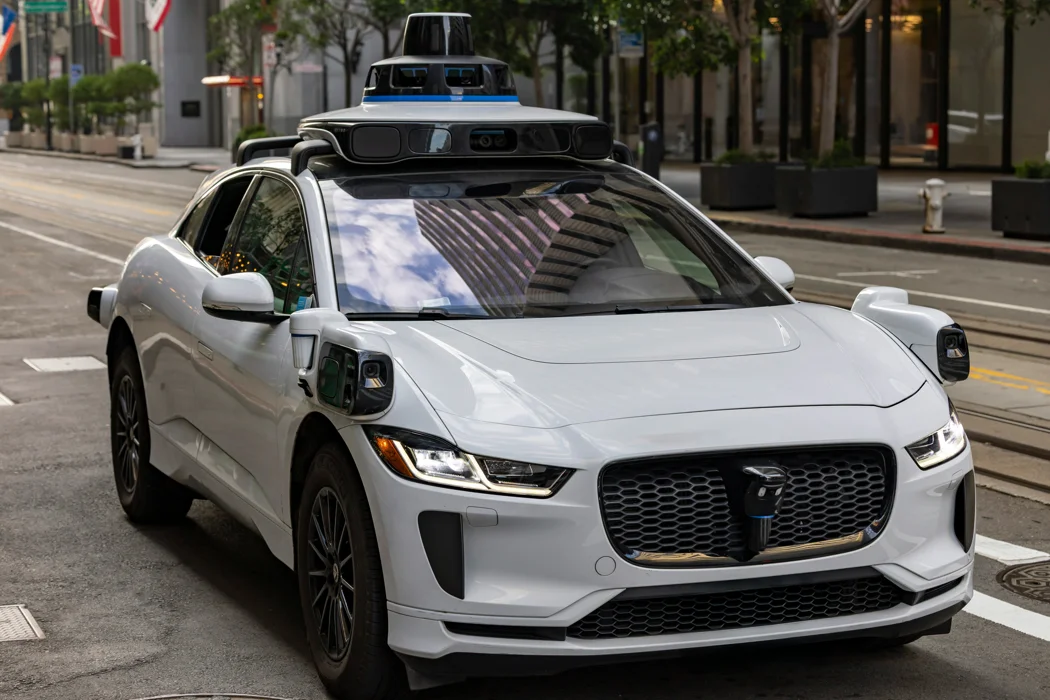
Smart, digital and data-driven transport refers to the integration of sensors, connectivity, data analytics and artificial intelligence into transport infrastructure and vehicles, enabling systems to sense conditions, predict outcomes and respond in real time. This includes intelligent transport systems (ITS) such as adaptive signal control, as well as more advanced applications such as digital twins, autonomous vehicles and predictive maintenance.
Engineering's role is to ensure that this digital layer is not just technically sophisticated but genuinely useful, secure, and accessible – connecting physical infrastructure, data systems and the people who depend on them every day.
Key Issues
Rapid but uneven deployment
The broader AI-in-transportation market is projected to grow at over 12% per year between 2025 and 2030 (to USD 7.6 billion), while the generative AI in transportation segment specifically is forecast to grow at 18–19% annually over the same period (to USD 2.83 billion) – both signaling accelerating but concentrated deployment in cities and countries with strong digital and financial infrastructure.
Flagship projects such as Riyadh Metro and Delhi's smart highways show what is achievable at scale, but replicating these systems affordably in lower-resource settings remains a significant engineering challenge.
Participants are encouraged to develop affordable AI and IoT solutions that can work with limited or unreliable internet access.
Data governance and cybersecurity
Connected and autonomous transport systems generate and depend on large volumes of sensitive data, raising questions of privacy, ownership and protection against cyber threats.
Robust cybersecurity engineering is essential as transport infrastructure becomes more interconnected and therefore more exposed to disruption.
Equity in algorithmic systems
AI-based traffic and mobility systems can unintentionally reproduce or amplify existing inequalities if they are not designed and tested with diverse populations and use cases in mind.
National programs such as the United States' "AI for ITS" initiative explicitly target safety, mobility and equity together, reflecting growing recognition that smart transport must benefit all users.
AI solutions should be easy to understand, tested to avoid bias, and monitored by humans with clear responsibility for their decisions and results.
Interoperability and standards
International standards bodies are actively developing common frameworks – such as vocabularies for electronic traffic regulation management – to ensure smart transport systems from different manufacturers and countries can work together.
Without shared standards, fragmented smart-transport deployments risk creating new digital silos instead of integrated, efficient networks.

KEY DATES
- - Registrations open
- - Challenges released
- - Submissions due
- - Winners announced
WHAT DO YOU NEED TO SUBMIT?
The 2027 WFEO Hackathon has a single submission round, giving teams three weeks to develop and submit their solution.
They must submit a 5-minute video, team photo and written submission.
Written submissions must be in English.
Videos may be recorded in another language but must include English subtitles.
Read the submission requirements on Zealous.
PRIZES
€7,000 IN PRIZE MONEY
FIRST PLACE
€4,000
SECOND PLACE
€2,000
THIRD PLACE
€1,000
Prizes will be split evenly between the members of each winning team.
FAQs
How do we upload our submission?
Upload your entry through the WFEO Hackathon submission page on Zealous.
Do I have to be a university student to participate?
No. The Hackathon is primarily for engineering students and young engineers under 30.
Can high school students or participants under 18 take part in the WFEO Hackathon?
Yes. High school students and other participants under the age of 18 may participate in the WFEO Hackathon as team members, provided they have the consent of a parent or legal guardian.
Participants under 18 will be required to submit a parental/guardian consent form during the application process.
Teams including participants under 18 must be led by an eligible engineering student or young engineer under the age of 30.
Does everyone have to be from the same university or institution?
No. Teams can include participants from different universities, institutions and locations.
Is there any cost to participate?
No. The 2027 WFEO Hackathon is completely free to enter.
When will we receive the Challenges?
The official Challenges will be released on 20 November 2026, marking the beginning of the three-week Hackathon period.
How many participants can be in a team?
Teams consist of 3 to 5 participants and must be led by a young engineer or an engineering student.
Multidisciplinary teams are encouraged but must be led by a young engineer or an engineering student.
What can you tell us about the Challenges?
The Challenges will focus on real-world issues where engineering can contribute to Sustainable Transport and the United Nations Sustainable Development Goals. The official Challenges remain confidential until 20 November 2026.
Do I need a team before I register?
No. Register individually and use our Facebook group to connect with potential teammates.
Can my team include people from different countries?
Yes. Teams can collaborate across universities, institutions, disciplines and countries.
Can we use AI in our submission?
Yes. AI tools can assist with your submission, including creating visualizations.
However, AI must not mislead or misrepresent the potential or feasibility of your solution, including through unrealistic visualizations or false deepfake endorsements.
Who owns the intellectual property for our solution?
Entrants retain ownership of their designs. By participating, entrants give WFEO permission to use and modify submitted photographs, videos and written content to promote current and future Hackathons.
Can we use copyrighted material?
Teams should use original material wherever possible. Music, stock footage and other third-party content must be copyright-free or appropriately licensed.
Who should I contact with a Hackathon query?
Please email the WFEO Hackathon team at wed@wfeo.org.