
2027 WFEO Hackathon
CHALLENGE 2
Clean Mobility and Energy Transition
Power transport with affordable, clean energy
Submit your solution3,000+ engineers. 41 countries. 9 million annual engagements. One global challenge. Now it's your turn.
Engineering responses to advance SDG 7: Affordable and Clean Energy
Transport accounts for a very large share of global energy-related emissions, making it one of the largest single levers available to the world in the race to decarbonize. According to the IEA's Global EV Outlook 2026 (published 10 July 2026), global electric car sales grew by 20% to exceed 20 million in 2025, representing one in four new cars sold worldwide (25% market share), up from about 5% five years earlier. Global EV sales are forecast to reach around 23 million units in 2026, or roughly 28% of total car sales; a subsequent IEA update following a 35% quarter-on-quarter rebound in Q2 2026 raised this forecast slightly to around 29%.
Yet this transition remains uneven. China's EVs accounted for nearly 55% of car sales in 2025 (more than 13 million vehicles, ~60% of global EV sales), while Europe's electric car sales rose by more than 30% to reach 28% of total sales. Fast-growing emerging markets such as Vietnam, Thailand and Colombia are seeing electric car sales approach or exceed a third of the market, while electric vehicles still represent less than 1% of car sales across most of Africa. Two- and three-wheelers, the backbone of mobility for hundreds of millions of people across Asia and Africa, continue to electrify rapidly.
Submit your solutionThe Challenge
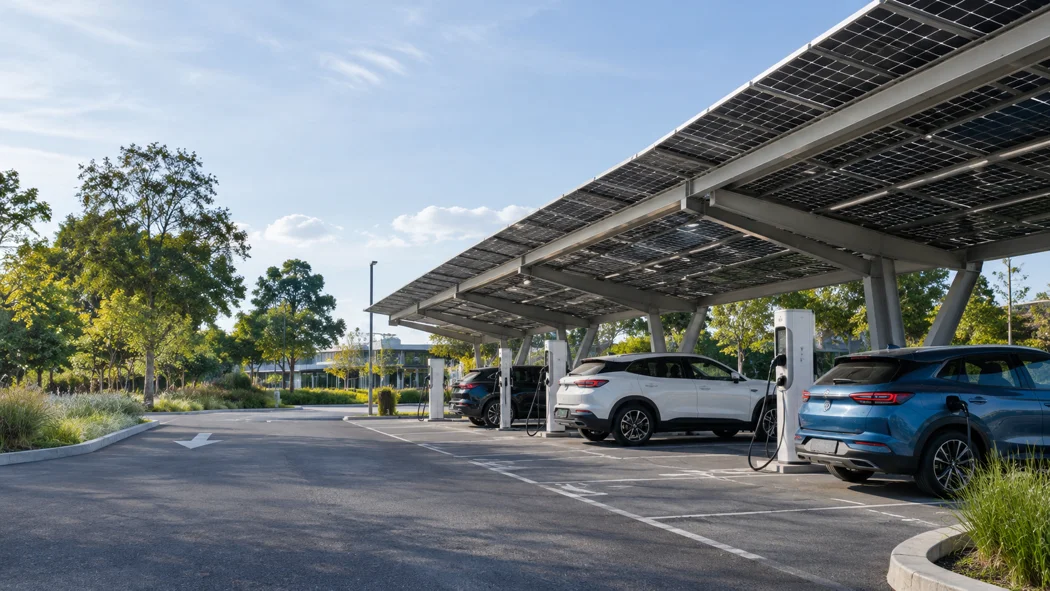
How can transport systems shift to clean, affordable energy without leaving lower-income users, regions and vehicle segments behind? Explore the barriers to clean mobility in your context – cost, charging access, grid capacity, fuel type – and propose engineering solutions that accelerate an equitable energy transition for transport.
Participants are encouraged to explore different clean energy solutions for transport, not only electric vehicles, and propose affordable, practical solutions adapted to local conditions.
Engineering Responses and Outcomes
Engineering across multiple disciplines is essential to address this challenge.
Electrical and power systems engineers
can design charging infrastructure, smart-charging and vehicle-to-grid (V2G) systems that integrate growing EV fleets without overloading electricity networks.
Mechanical and automotive engineers
can develop affordable electric powertrains for cars, two- and three-wheelers, buses and trucks adapted to local conditions, including extreme heat or cold.
Chemical and materials engineers
can advance battery chemistries – including lower-cost lithium iron phosphate (LFP) batteries – and explore alternative fuels such as green hydrogen for heavy-duty and long-distance transport.
Civil and infrastructure engineers
can plan and build charging and refueling networks, including off-grid, solar-powered charging for areas without reliable electricity access.
Additional clean mobility solutions
Participants are encouraged to explore affordable options such as converting motorcycles and three-wheelers to electric power, battery recycling and reuse, and community-based renewable energy systems, alongside other clean transport technologies suited to local conditions.
Energy systems and policy-engineering specialists
can model the total cost of ownership and design financing or feebate mechanisms that make clean vehicles accessible to lower-income users and fleet operators.
Each participating team is expected to submit the following three engineering outputs:
Technical Design A clear engineering design showing how the solution works and its main components.
Feasibility Study A study covering technical feasibility, estimated costs, maintenance, and practical implementation.
Small Prototype A simple physical or digital model showing how the proposed solution works.
NB: Participants should demonstrate the technical feasibility, estimated costs, environmental sustainability, maintenance needs, and scalability of their solutions. They should also consider locally available materials and practical implementation plans.
Evaluation Criteria
Projects will be evaluated based on the following criteria:
Innovation and Creativity 15%
Engineering Design and Technical Quality 20%
Technical Feasibility and Practical Implementation 20%
Affordability and Sustainability 15%
Inclusiveness, Scalability and Societal Impact 20%
Prototype Functionality and Demonstration 10%
NB: All projects will be evaluated using the same criteria and scoring system to ensure fairness across the four challenges. Judges will consider innovation, engineering quality, feasibility, affordability, sustainability, inclusiveness, scalability, and measurable impact.
Innovation Examples
Some examples of engineering innovations accelerating the clean transport energy transition.
Affordable electric vehicles
VinFast affordable electric models, Viet Nam – domestically produced, price-competitive EVs that have driven mass-market adoption, helping Vietnam become Southeast Asia's largest electric car market.
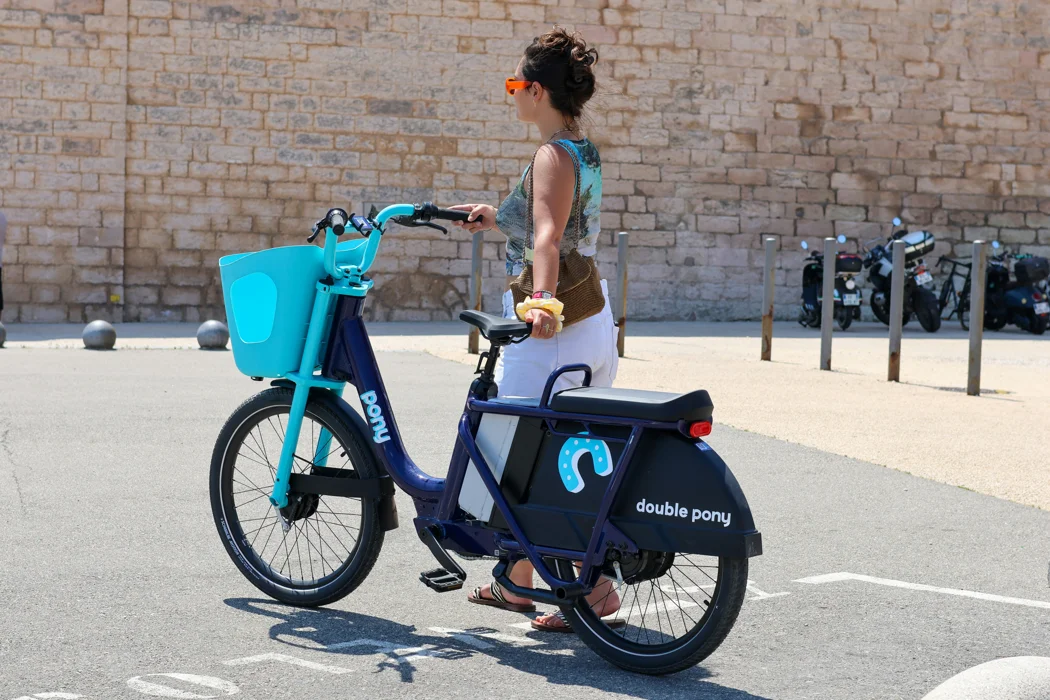
Electric two- and three-wheelers, Asia and Africa – the fastest-electrifying transport segment globally, already approaching one in three new sales in some markets, providing low-cost clean mobility for millions.
Charging and grid integration
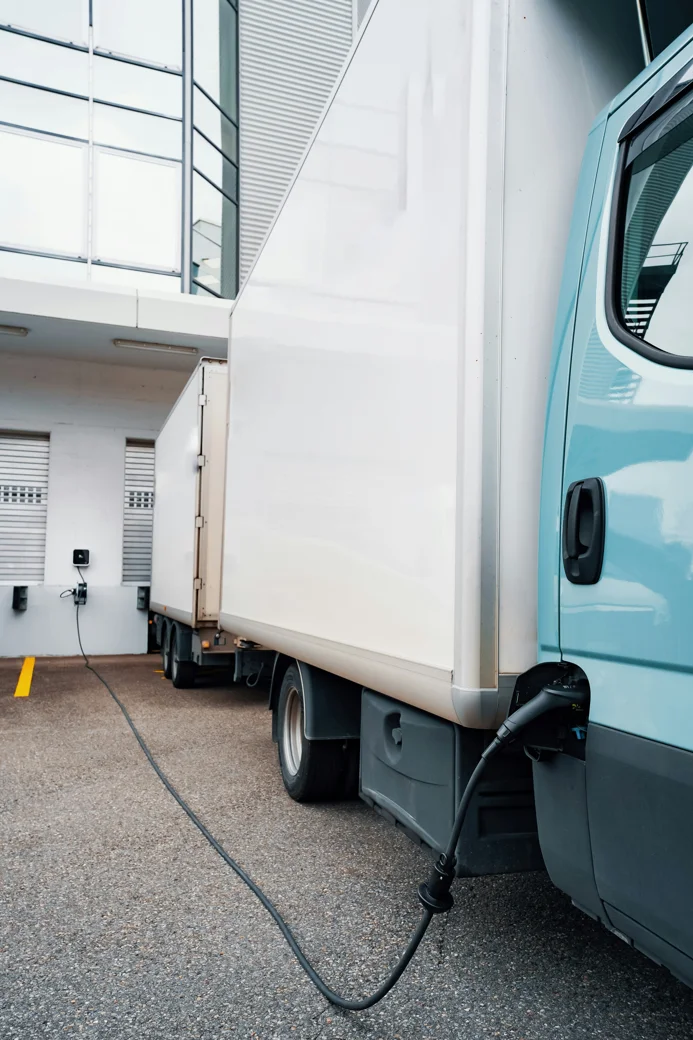
Megawatt charging systems for heavy-duty trucks – ultra-fast charging technology, first deployed in 2024, drastically cutting charging times for electric trucks on long-distance routes.
Vehicle-to-Grid (V2G) and smart charging – technologies that synchronize EV charging with grid capacity and renewable generation, easing peak demand as electric fleets grow.
Heavy-duty and alternative fuels
Battery-swap-capable electric trucks – a deployment model reducing downtime for electric heavy-duty fleets by enabling rapid battery exchange instead of long charging stops.
Cold-climate electric bus fleet planning, Quebec City (Canada) – an engineering framework optimizing charging strategy for electric buses operating reliably through harsh winter conditions.
Deep Dive
The clean energy transition in transport is advancing faster than almost any other sector of the global economy, but its benefits are not yet evenly distributed. Vehicle electrification is the central technology pathway: electric vehicles displaced an estimated 1.2 million barrels of oil per day in 2025 alone, with displacement projected to rise sharply by 2030 as adoption accelerates across all vehicle segments, from two-wheelers to heavy trucks. Notably, the pace of adoption in 2026 has been reshaped by a surge in global oil prices, which has pushed EV demand higher in many markets even as overall car sales softened in China and the United States.
Affordability, infrastructure and grid readiness still vary enormously by region. Closing this gap is as much an engineering and systems-design challenge as it is a policy one: it requires vehicles, batteries, charging networks and electricity grids to be engineered together, with affordability and equity built in from the start, rather than addressed only once a market has matured.
Key Issues
Uneven global adoption
Electric car sales exceeded 20 million in 2025 (25% of the global market) and are forecast to reach around 23 million in 2026 (28–29% of sales), but adoption remains below 1% of car sales across most of Africa.
Two- and three-wheelers are electrifying fastest of all transport segments, offering a particularly cost-effective decarbonization pathway in emerging and developing economies.
Affordability and the cost of transition
The purchase price of electric heavy-duty trucks remains two to three times higher than diesel equivalents in major markets, discouraging adoption by fleet operators working on tight margins.
Policy tools such as feebates – taxing inefficient vehicles to subsidize cleaner ones – are emerging as ways to fund the transition without relying solely on public subsidy.
Participants should consider the total cost of their solutions, including the initial investment, operating costs, and maintenance costs.
Charging infrastructure and grid capacity
Public charging infrastructure is projected to grow nearly eightfold by 2030, but rollout remains concentrated in markets that already have strong grid capacity and investment.
Smart and off-grid, solar-powered charging solutions can extend access to areas with limited or unreliable electricity supply.
Participants are encouraged to develop solutions adapted to local energy conditions, especially in areas with limited or unreliable electricity supply.
A just energy transition
Tax and policy design must avoid disproportionately burdening people in lower-income households who are more likely to own older, less efficient vehicles, as transport tax systems adapt to declining fuel-tax revenue.
Battery and raw-material supply chains – including lithium, cobalt and nickel – raise their own sustainability and equity questions that engineering and material science must continue to address.
KEY DATES
- - Registrations open
- - Challenges released
- - Submissions due
- - Winners announced
WHAT DO YOU NEED TO SUBMIT?
The 2027 WFEO Hackathon has a single submission round, giving teams three weeks to develop and submit their solution.
They must submit a 5-minute video, team photo and written submission.
Written submissions must be in English.
Videos may be recorded in another language but must include English subtitles.
Read the submission requirements on Zealous.
PRIZES
€7,000 IN PRIZE MONEY
FIRST PLACE
€4,000
SECOND PLACE
€2,000
THIRD PLACE
€1,000
Prizes will be split evenly between the members of each winning team.
FAQs
How do we upload our submission?
Upload your entry through the WFEO Hackathon submission page on Zealous.
Do I have to be a university student to participate?
No. The Hackathon is primarily for engineering students and young engineers under 30.
Can high school students or participants under 18 take part in the WFEO Hackathon?
Yes. High school students and other participants under the age of 18 may participate in the WFEO Hackathon as team members, provided they have the consent of a parent or legal guardian.
Participants under 18 will be required to submit a parental/guardian consent form during the application process.
Teams including participants under 18 must be led by an eligible engineering student or young engineer under the age of 30.
Does everyone have to be from the same university or institution?
No. Teams can include participants from different universities, institutions and locations.
Is there any cost to participate?
No. The 2027 WFEO Hackathon is completely free to enter.
When will we receive the Challenges?
The official Challenges will be released on 20 November 2026, marking the beginning of the three-week Hackathon period.
How many participants can be in a team?
Teams consist of 3 to 5 participants and must be led by a young engineer or an engineering student.
Multidisciplinary teams are encouraged but must be led by a young engineer or an engineering student.
What can you tell us about the Challenges?
The Challenges will focus on real-world issues where engineering can contribute to Sustainable Transport and the United Nations Sustainable Development Goals. The official Challenges remain confidential until 20 November 2026.
Do I need a team before I register?
No. Register individually and use our Facebook group to connect with potential teammates.
Can my team include people from different countries?
Yes. Teams can collaborate across universities, institutions, disciplines and countries.
Can we use AI in our submission?
Yes. AI tools can assist with your submission, including creating visualizations.
However, AI must not mislead or misrepresent the potential or feasibility of your solution, including through unrealistic visualizations or false deepfake endorsements.
Who owns the intellectual property for our solution?
Entrants retain ownership of their designs. By participating, entrants give WFEO permission to use and modify submitted photographs, videos and written content to promote current and future Hackathons.
Can we use copyrighted material?
Teams should use original material wherever possible. Music, stock footage and other third-party content must be copyright-free or appropriately licensed.
Who should I contact with a Hackathon query?
Please email the WFEO Hackathon team at wed@wfeo.org.