
2027 WFEO Hackathon
CHALLENGE 1
Inclusive Mobility
Design transport that leaves no one behind
Submit your solution3,000+ engineers. 41 countries. 9 million annual engagements. One global challenge. Now it's your turn.
Engineering responses to advance SDG 3: Good Health and Well-being
Mobility is a precondition for health, dignity and opportunity – yet for hundreds of millions of people, today's transport systems are unsafe, inaccessible, or simply unavailable. According to the World Health Organization's most recent global status update (20 July 2026), the global rate of road traffic deaths declined by 21% between 2011 and 2025, even as the world's vehicle fleet grew by more than one billion motor vehicles over the same period. Despite this progress, road traffic crashes still claimed an estimated 1.16 million lives in 2025, and road traffic injuries remain the leading cause of death for children and young people aged 5–29.
Progress remains highly uneven across regions: the WHO European Region recorded a 36% drop in deaths and the Western Pacific Region a 15% drop, while the Americas saw no change and the WHO African Region recorded a 17% rise in road deaths over the same period. Vulnerable road users – pedestrians, cyclists, and people traveling by two- or three-wheelers – continue to bear a disproportionate share of this burden.
At the same time, more than 1.3 billion people, around 16% of the world's population, live with significant disability – stations without ramps, vehicles without audible or visual information, and rural areas where the nearest clinic or school is simply out of reach. Engineering, applied with empathy and inclusion at its core, can close this gap. From safer road design to assistive navigation technologies, the discipline has the tools to make mobility a right exercised by everyone – not a privilege available to a few.
Submit your solutionThe Challenge
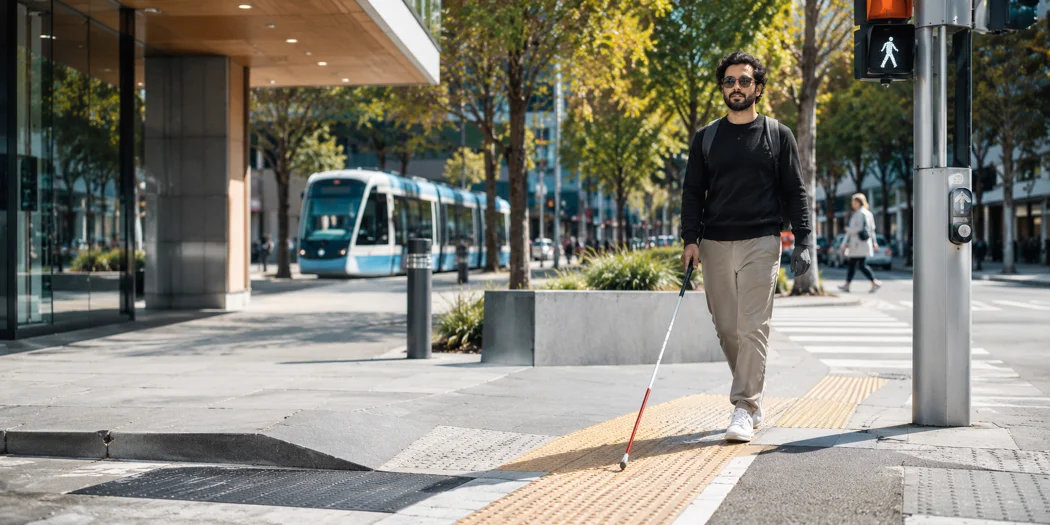
Who is being left behind by today's mobility systems, and why? Explore how unsafe, inaccessible or unaffordable transport threatens people's health, safety and independence, and propose engineering solutions that make mobility genuinely available to all – including women, older people, persons with disabilities, children, and underserved rural and urban communities.
Teams should propose an integrated engineering solution that addresses all the main mobility problems: road safety, accessibility, affordability, and limited transport in underserved areas, rather than focusing on only one problem.
Engineering Responses and Outcomes
Engineering across multiple disciplines is essential to address this challenge.
Civil and highway engineers
can apply Safe System principles – traffic calming, separated cycling and walking infrastructure, and universal design standards – to reduce the risk of death and injury for all road users.
Biomedical and mechanical engineers
can design affordable assistive devices and adapted vehicles, from low-cost prosthetics to wheelchair-accessible transport, that restore independent mobility to people with disabilities.
Software, AI and electronics engineers
can build navigation, captioning and sensing tools – such as wearable guidance devices for visually impaired travelers or real-time accessible journey planners – that make existing networks easier and safer to use.
Transport and urban planning engineers
can design multimodal networks and last-mile connections that extend affordable services into underserved rural and peri-urban areas.
Data and human-factors engineers
can analyze traffic conflict and crash data to identify high-risk locations and target interventions where they will save the most lives.


Teams are encouraged to work with local communities, transport operators, and people who will use their solutions. This will help them better understand real needs and develop practical, accessible solutions.
Each participating team is expected to submit the following three engineering outputs:
Technical Design A clear engineering design showing how the solution works and its main components.
Feasibility Study A study covering technical feasibility, estimated costs, maintenance, and practical implementation.
Small Prototype A simple physical or digital model showing how the proposed solution works.
Evaluation Criteria
Projects will be evaluated based on the following criteria:
Innovation and Creativity 15%
Engineering Design and Technical Quality 20%
Technical Feasibility and Practical Implementation 20%
Affordability and Sustainability 15%
Inclusiveness, Scalability and Societal Impact 20%
Prototype Functionality and Demonstration 10%
NB: Direct engagement with beneficiaries and stakeholders is encouraged but should not be mandatory. Teams can also use reliable research to understand users' needs.
NB: All projects will be evaluated using the same criteria and scoring system to ensure fairness across the four challenges. Judges will consider innovation, engineering quality, feasibility, affordability, sustainability, inclusiveness, scalability, and measurable impact.
Innovation Examples
Some examples of engineering innovations that are already advancing safer, more inclusive mobility.
Assistive navigation and accessible design
Ashirase smart shoes, Japan – vibration-guided footwear and a companion app that help blind and visually impaired travelers navigate streets independently.
3D-printed prosthetics, Uganda and India – low-cost, locally manufactured prosthetic limbs giving underserved populations affordable, personalized mobility devices.
Wearable tactile and audio guidance devices – AI- and IoT-enabled smart shoes and wristbands that support safe, independent navigation for visually impaired users.
Inclusive shared mobility
Via mobility-on-demand program, Arlington (USA) – a flexible, app- and call-based transit replacement integrating wheelchair-accessible vehicles and prepaid payment options for disadvantaged travelers.
INCLUSION project, European Union – a multi-country research and pilot program testing accessible, ICT-enabled transport solutions in urban, peri-urban and rural areas.
Safer road systems
Safe System approach – a holistic road-safety design philosophy, now adopted by multiple countries, that accounts for human error and protects vulnerable road users by design.
Traffic Conflict Technique (TCT) Toolkit – a low-cost data collection methodology piloted in Ghana, Vietnam and Mexico to identify and reduce pedestrian-vehicle risk around school zones.


Deep Dive
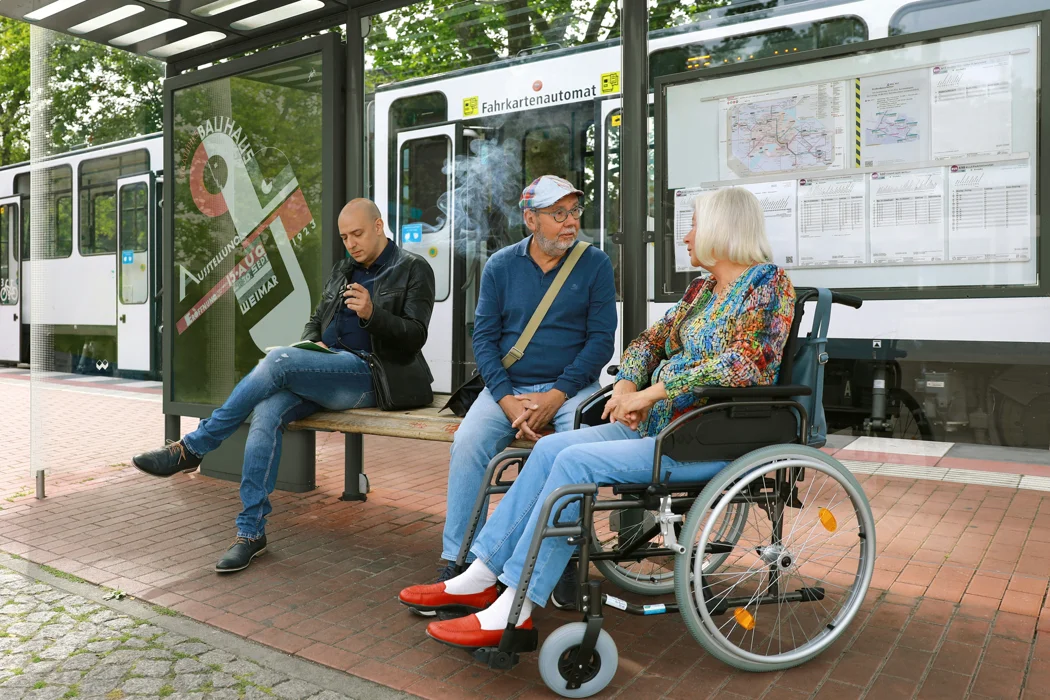
Inclusive and accessible mobility means designing transport systems, vehicles and infrastructure so that the widest possible range of people – regardless of age, income, gender, ability or location – can travel safely, affordably and with dignity. It draws on universal design principles: features originally created for people with disabilities, such as ramps, audible signals or simplified interfaces, end up benefiting everyone, from parents with strollers to older travelers.
Engineering has a central role to play because most of today's vulnerabilities are built into the system itself: roads designed primarily for motor vehicles, public transport networks that stop short of low-income or rural areas, and digital mobility tools that assume a level of connectivity, literacy or physical ability not everyone has. Closing these gaps requires engineers to design with, not only for, the people who are currently excluded.
Key Issues
The road safety burden
Global road deaths fell by 21% (rate-adjusted) between 2011 and 2025, but 1.16 million people still died on the world's roads in 2025, and road traffic injuries remain the leading cause of death for people aged 5–29.
Progress is highly uneven: Europe (-36%) and the Western Pacific (-15%) have made strong gains, South-East Asia recorded a modest -2%, the Americas have stagnated, and Africa recorded a 17% increase in road deaths over the same period.
Vulnerable road users – pedestrians, cyclists and riders of two- and three-wheelers – account for more than half of all road deaths worldwide, with motorcyclists alone representing close to one-third of global fatalities.
Disability and mobility exclusion
More than 1.3 billion people, about 16% of the global population, live with significant disability, and many transport systems remain physically or digitally inaccessible to them.
Assistive and accessible technologies, when designed inclusively from the start, tend to benefit far broader groups of travelers than their original target users.
Rural and peri-urban access gaps
Rural communities often face limited, infrequent or unaffordable transport options, restricting access to healthcare, education and employment.
Innovative models such as flexible mobility-on-demand services and last-mile connections are emerging as scalable ways to extend coverage without the cost of fixed infrastructure.
Developing countries face additional challenges, including poor road infrastructure, unreliable electricity, limited internet connectivity, and high maintenance costs. Participants are encouraged to develop affordable, practical solutions that can be adapted to local conditions.
Affordability and the gender dimension
Cost remains one of the most significant barriers to mobility for people in low-income households, particularly women and youth, who are also more likely to depend on walking, cycling or informal transport.
Co-design approaches that directly involve underserved groups in planning have been shown to produce more relevant and effective transport solutions.
KEY DATES

- - Registrations open
- - Challenges released
- - Submissions due
- - Winners announced
WHAT DO YOU NEED TO SUBMIT?
The 2027 WFEO Hackathon has a single submission round, giving teams three weeks to develop and submit their solution.
They must submit a 5-minute video, team photo and written submission.
Written submissions must be in English.
Videos may be recorded in another language but must include English subtitles.
Read the submission requirements on Zealous.
PRIZES
€7,000 IN PRIZE MONEY
FIRST PLACE
€4,000
SECOND PLACE
€2,000
THIRD PLACE
€1,000
Prizes will be split evenly between the members of each winning team.
FAQs
How do we upload our submission?
Upload your entry through the WFEO Hackathon submission page on Zealous.
Do I have to be a university student to participate?
No. The Hackathon is primarily for engineering students and young engineers under 30.
Can high school students or participants under 18 take part in the WFEO Hackathon?
Yes. High school students and other participants under the age of 18 may participate in the WFEO Hackathon as team members, provided they have the consent of a parent or legal guardian.
Participants under 18 will be required to submit a parental/guardian consent form during the application process.
Teams including participants under 18 must be led by an eligible engineering student or young engineer under the age of 30.
Does everyone have to be from the same university or institution?
No. Teams can include participants from different universities, institutions and locations.
Is there any cost to participate?
No. The 2027 WFEO Hackathon is completely free to enter.
When will we receive the Challenges?
The official Challenges will be released on 20 November 2026, marking the beginning of the three-week Hackathon period.
How many participants can be in a team?
Teams consist of 3 to 5 participants and must be led by a young engineer or an engineering student.
Multidisciplinary teams are encouraged but must be led by a young engineer or an engineering student.
What can you tell us about the Challenges?
The Challenges will focus on real-world issues where engineering can contribute to Sustainable Transport and the United Nations Sustainable Development Goals. The official Challenges remain confidential until 20 November 2026.
Do I need a team before I register?
No. Register individually and use our Facebook group to connect with potential teammates.
Can my team include people from different countries?
Yes. Teams can collaborate across universities, institutions, disciplines and countries.
Can we use AI in our submission?
Yes. AI tools can assist with your submission, including creating visualizations.
However, AI must not mislead or misrepresent the potential or feasibility of your solution, including through unrealistic visualizations or false deepfake endorsements.
Who owns the intellectual property for our solution?
Entrants retain ownership of their designs. By participating, entrants give WFEO permission to use and modify submitted photographs, videos and written content to promote current and future Hackathons.
Can we use copyrighted material?
Teams should use original material wherever possible. Music, stock footage and other third-party content must be copyright-free or appropriately licensed.
Who should I contact with a Hackathon query?
Please email the WFEO Hackathon team at wed@wfeo.org.