




Build resilient infrastructure, promote inclusive and sustainable industrialization and foster innovation
Pipeline leaks are often invisible until serious damage is done. PipeSense is changing that with technology designed to spot problems within minutes. Using ultra-high-frequency pressure sensors and machine learning, the company can detect leaks, pinpoint their location, and alert operators in real time.
By turning pipelines into proactively monitored systems rather than reactive ones, PipeSense helps operators act decisively before small issues escalate into environmental or safety crises. The result is greater confidence in critical infrastructure pipeline systems, with fewer false alarms and less downtime.
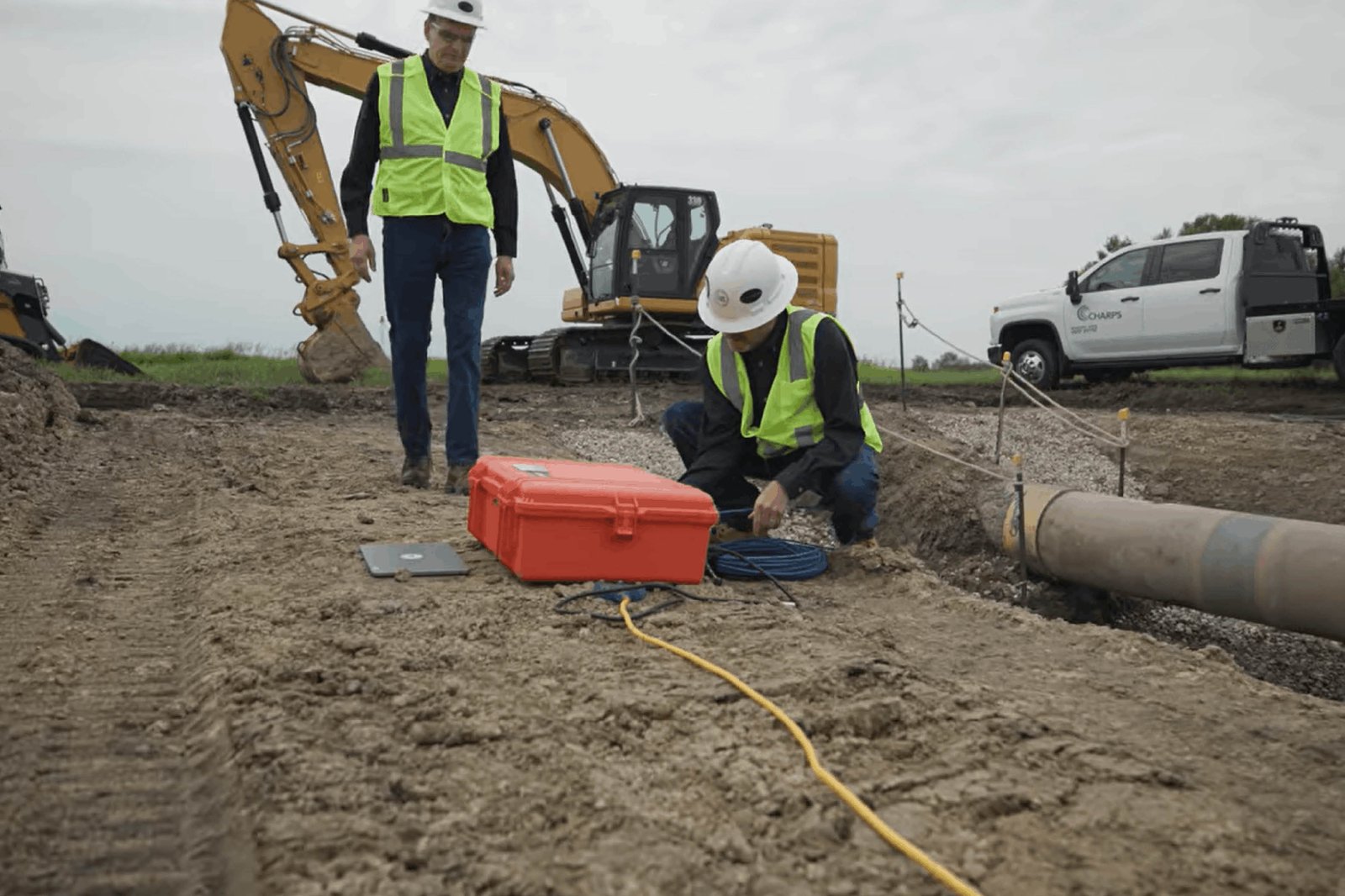
“The quicker you can get to the leak, the less risk you have,” says Scott Bauer, PipeSense Vice-President of Operations.
Founded in 2023 and headquartered in Houston, Texas, PipeSense serves oil, gas, utilities, and mining operators across North and South America and expanding global markets. Its core technologies – PipeGuard, PipeTest, PipeTrack, and PipeScan – provide continuous leak detection, hydrostatic pressure and temperature monitoring, real-time pig tracking, and blockage location detection.
The company tailors its solutions to each pipeline’s unique conditions, supported by testing facilities in Texas and Minnesota. With a team bringing over a century of combined industry experience, PipeSense is both a technology provider and operational partner.
In the oil and gas industry, keeping pipelines flowing is the goal, but also a constant challenge. One of the most common causes of blockages is when under-pressure hydrocarbons interact with water in low-temperature conditions to form a hydrate plug.

In March 2025, a US-based operator suspected the presence of a plug within a 12.5-mile segment of a pipeline carrying liquid propane, in which the flow had stopped. PipeSense installed two field processing units that were connected to pressure sensor manifolds and linked to PipeSense’s analysis platform through Starlink satellite communications.
The testing procedure involved generating controlled 2–3 second pressure pulses at multiple sites. For each pulse, sensors recorded the reflections returning from the suspected blockage. The results revealed not one, but two plugs. Armed with both GPS coordinates and linear distance calculations, the operator was then able to accurately target its remediation efforts.
PipeSense’s work directly supports SDG 9 – to build resilient infrastructure, promote inclusive and sustainable industrialization, and foster innovation. By delivering immediate notification of pipeline leak events, the company minimizes unplanned releases, protects communities and ecosystems, conserves valuable resources, and ensures the reliability of critical energy and water infrastructure.
The company’s innovation in advanced monitoring reduces both environmental impact and operational costs by enabling rapid intervention. Early detection also cuts emissions and waste by helping to minimize spills from pipelines. As Stuart Mitchell, PipeSense President and Chief Technology Officer, says, “There’s nothing less sustainable than undetected leaks.”
PipeSense technology pinpoints pipeline leaks to within 15 meters in minutes.