The next rail revolution
From its pioneering rail clip to next-generation fastening systems, Pandrol continues to redefine what rail infrastructure can achieve



9
Build resilient infrastructure, promote inclusive and sustainable industrialization and foster innovation
The industry standard
For decades, railway infrastructure manufacturer Pandrol has pioneered the design, installation and maintenance of rail technology. The company’s broad array of products includes rail fastening, signaling systems and welding equipment. Most impactful of all is the Pandrol clip, designed and patented by Norwegian engineer Per Pande-Rolfsen in 1957.
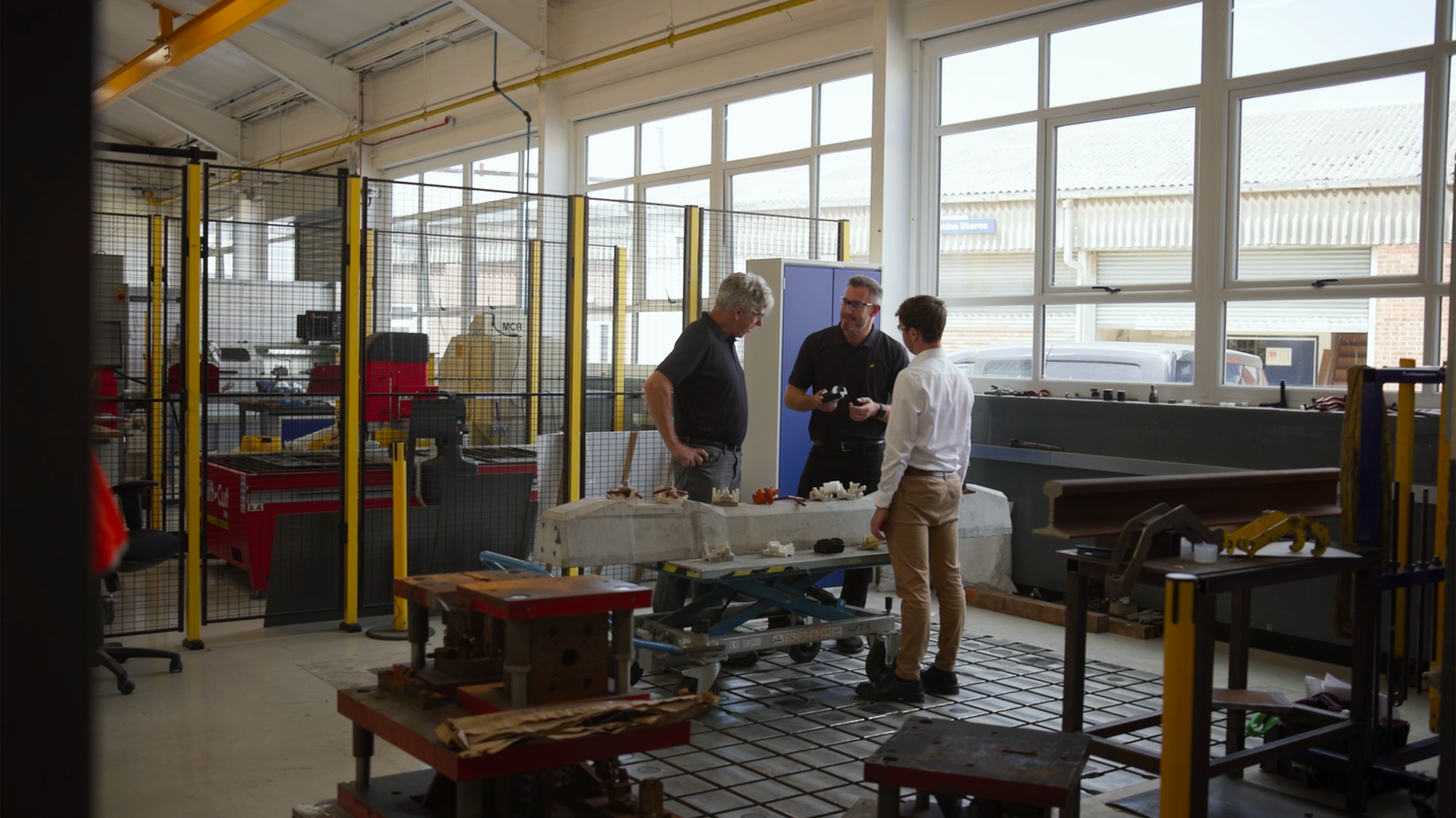
This clip and its successor products have become the industry standard for securing railway tracks to sleepers, but Pandrol is always innovating. “What if the clip could be installed with just one action by one person?” says Tom Williams, Head of Design and Process Engineering, at Pandrol. “Asking the question is one thing, but it took us years to find the answer.”
A history of innovation
Pandrol’s fastening origins lie in the Elastic Rail Spike Company, founded in London in 1937 to sell cutting-edge rail fastenings. While much has changed since then – including the company’s name and acquisition by the Delachaux Group, headquartered in France – improving the efficiencies of rail fastenings remains the focus. Today, Pandrol has significant international reach, with operations in more than 40 locations across the world.
“
Pandrol invented the modern railway clip back in the 1950s. Every innovation we've made since then has built on that foundation.
Bespoke technology
Pandrol’s equipment is often specifically designed for the requirements of individual infrastructure projects. In its work for the Sydney Light Rail project, a network expansion that runs through Sydney’s central business district, Pandrol developed specialized rail fastening systems and sustainably designed rubber mats to dampen the sound of trams.
For the Bangkok to Chiang Mai Northern Line project in Thailand, Pandrol designed a 19km stretch of elevated track on a concrete viaduct to protect it from the monsoon floods that affect the region.
Pandrol also worked on one of the world’s largest coal-freight lines, the Menghua Railway in China. For this project, the company supplied its leading Fastclip fastening technology for more than half a million concrete sleepers, supporting the extremely heavy 40-ton freight loads. With the advent of Pandrol’s latest clip, the potential efficiency improvements for projects such as these are vast.
What does a sustainable future look like?
Pandrol’s constant drive to improve the way we move goods and people exemplifies the company’s commitment to SDG 9, which seeks to build resilient infrastructure, promote sustainable industrialization, and foster innovation.
Through international collaboration and a desire to make infrastructure installation, maintenance and function as safe and efficient as possible, Pandrol’s work is developing innovative design methods that open up new possibilities for the future of rail.
“Pandrol invented the modern railway clip back in the 1950s,” says Williams. “Every innovation we’ve made since then has built on that foundation, and this is just the latest step.”
“
Pandrol invented the modern railway clip back in the 1950s. Every innovation we've made since then has built on that foundation.
— Tom Williams, Head of Design and Process Engineering, Pandrol
Did you know?
Pandrol’s Fastclip was tested to the limit on the LGV Est line in 2007, when a French train set the rail speed record of 574.8k/h (357.2mph), a record that still stands.