

Build resilient infrastructure, promote inclusive and sustainable industrialization and foster innovation
At the forefront of international engineering and construction, Laing O’Rourke is rethinking the way buildings and infrastructure are conceived and delivered.
Established in 1978 and still a family-owned business, Laing O’Rourke has a reputation for innovation and taking an industry lead in sustainable practice.
By 2030, the company aims to have reduced the carbon emissions it directly controls (Scope 1 and 2) by 42% and emissions linked to purchased goods and services (Scope 3) by 25%, aligned with its validated science-based carbon reduction targets.
“Through innovation, we can push the boundaries to build infrastructure more safely, in new, more sustainable ways,” says Peter Lyons, Managing Director for Europe at Laing O’Rourke.
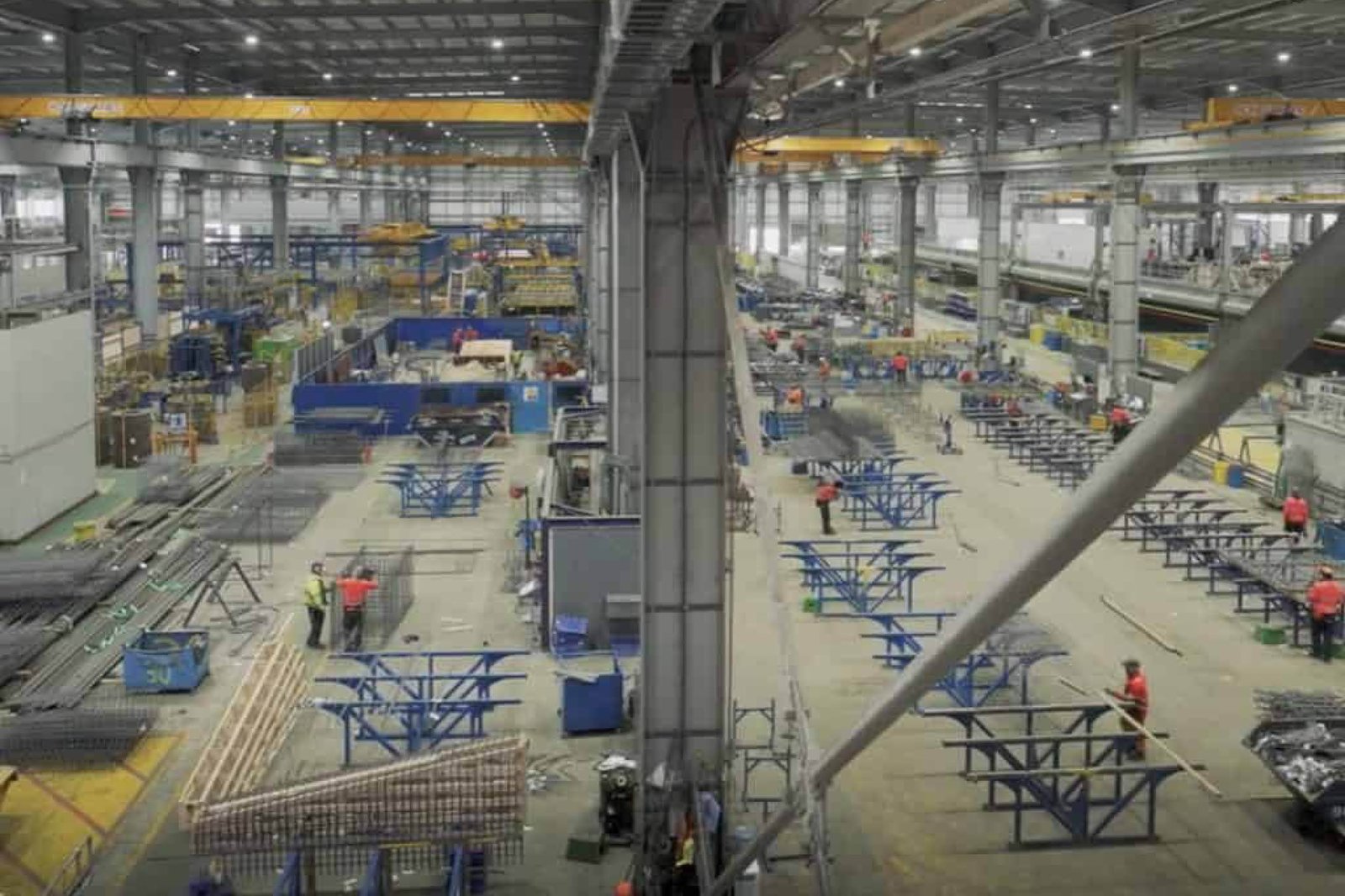
Laing O’Rourke is a pioneer of modern methods of construction (MMC). Under MMC, modular components are fabricated off-site in specialist facilities, reducing disruption around the construction site itself.
As the modular elements are built safely and quickly under managed conditions, they produce less waste, enable greater environmental and carbon control, and minimize disturbance for local communities. With its world-leading design, the Central Station Metro (CSM) project in Sydney, for example, required only three weekends of rail shutdowns for the roof to be lifted into place.
“We need to think about how we build just as much as what we build. Modern methods of construction are paving the way for a more sustainable future,” says Kayla Chaoui, Site Engineer for Laing O’Rourke at Sydney CSM.
Headquartered in Dartford in the UK, Laing O’Rourke operates on large-scale infrastructure projects across Europe, Australia, and the Middle East.
The company has worked on major projects around the world including East West Rail, HS2, Hinkley Point C nuclear power station, the Princes Highway East upgrade in Australia, and the Queensland Rail Station Accessibility Upgrade Program.
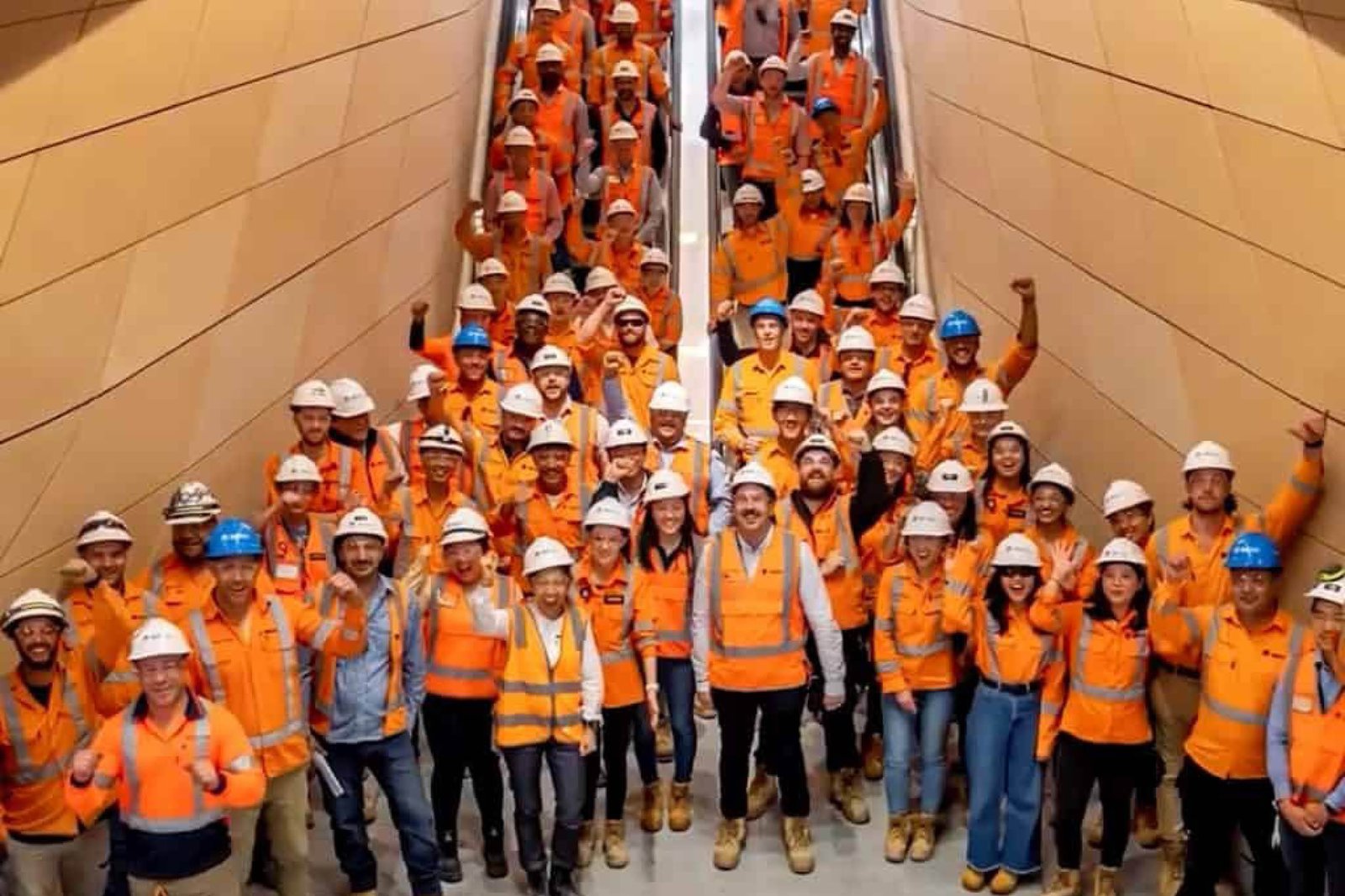
At Laing O’Rourke, a specialist in-house decarbonization team is tasked with identifying new, low-carbon innovations. For example, during a two-year concrete decarbonization program, run primarily from its Centre of Excellence for Modern Construction in Nottinghamshire, UK, they assessed, trialed, and implemented a number of novel materials.
“This gave us the confidence to mandate low-carbon concrete use in the UK and then Australia,” says Dr Ana Pavlović, Lead R&D Engineer at Laing O’Rourke.
Laing O’Rourke was the first contractor in the UK to stipulate use of low-carbon concrete on its projects, and the outcome is significant. The switch delivered a 15.5% reduction in carbon from concrete for the UK business alone in its first year.
For Laing O’Rourke, sustainability is built in at the beginning of each project to support a lower-carbon economy. By pushing the boundaries of construction, the company aligns with SDG 9, which aims to build resilient infrastructure, promote inclusive and sustainable industrialization, and foster innovation.
“We challenge ourselves to bring into being a new kind of construction industry that uses lower carbon materials, carbon efficient designs, and sustainable strategies,” says Lyons.
Laing O’Rourke aims to achieve a 50/50 gender balance by 2033. The company is committed to transforming the nature of construction work so that the stimulating and rewarding careers it offers appeal to a more diverse range of people.