


Build resilient infrastructure, promote inclusive and sustainable industrialization and foster innovation
It’s all about research, innovation, and enterprise at Abu Dhabi’s Khalifa University of Science and Technology, where students, researchers, and faculty collaborate with industry partners to implement ideas from the lab into real-world solutions for a more sustainable future.
“If we want a sustainable and inclusive future, innovation must translate into economic opportunity and national capability,” says His Excellency Prof. Ebrahim Al Hajri, President of Khalifa University. “As a catalyst for economic development, Khalifa University contributes to bringing the UAE’s vision to life, through knowledge that serves humanity.”
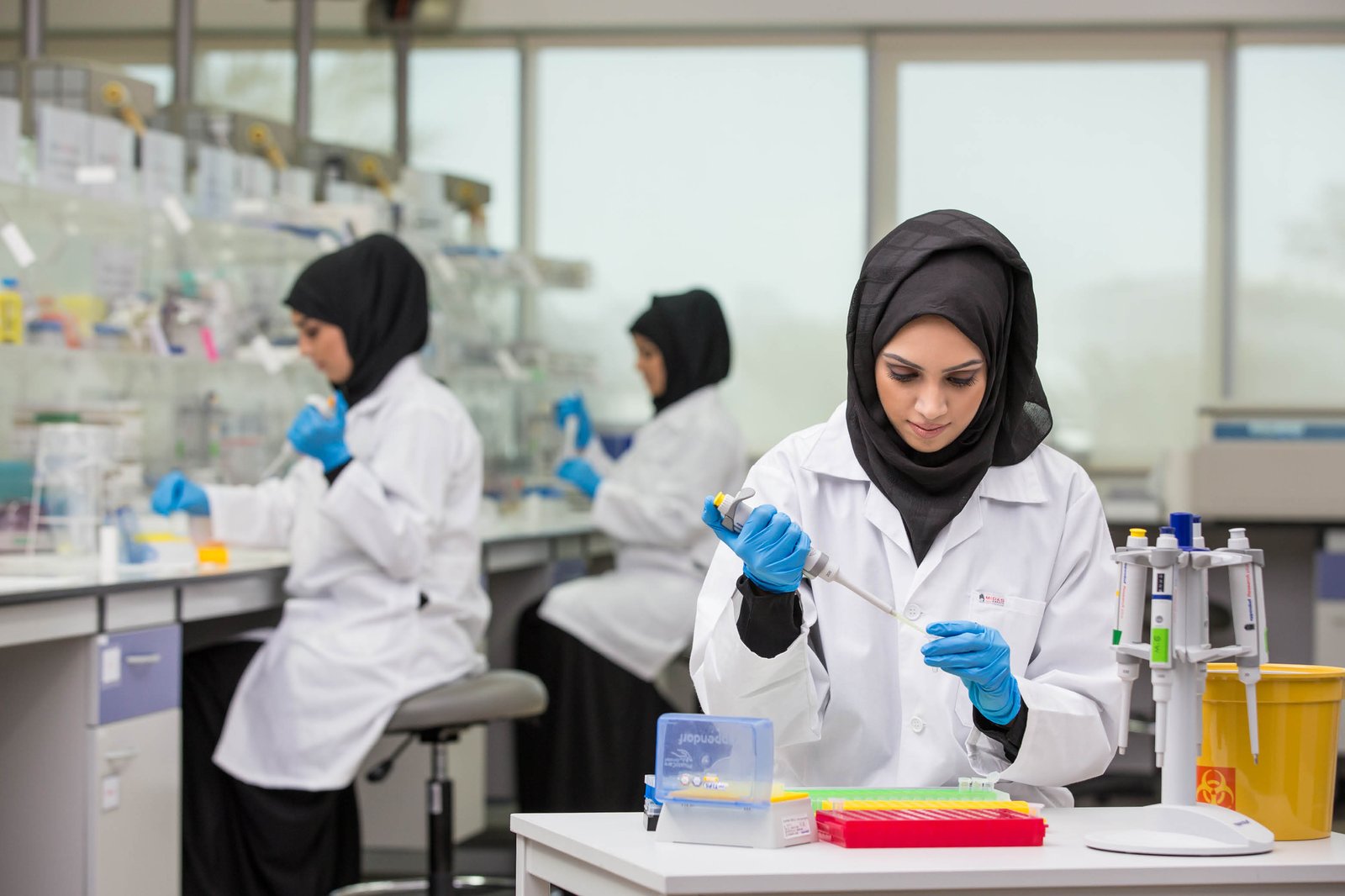
The purposeful work of the top-ranked science and technology university has reached far beyond the UAE. By forging more than 200 partnerships in over 40 countries, it is moving its ideas forwards.
Khalifa University is ranked top in the UAE for eight consecutive years and 177th globally, by the 2026 QS World University Rankings. Three research-intensive colleges that specialize in Engineering and Physical Sciences, Computing and Mathematical Sciences, and Medicine and Health Sciences drive interdisciplinary research across critical national sectors.
There are 36 academic departments and 14 research centers spanning innovations from satellites, polar studies, and solar technology to water filtration. Offering bachelor’s, master’s and doctoral degrees, Khalifa University includes over 4,000 students from more than 70 nationalities.
DroneLeaf is a Khalifa University spinoff pioneering the next generation of AI-powered autonomous flight software. The technology enables drones to learn how to fly optimally in a matter of seconds.
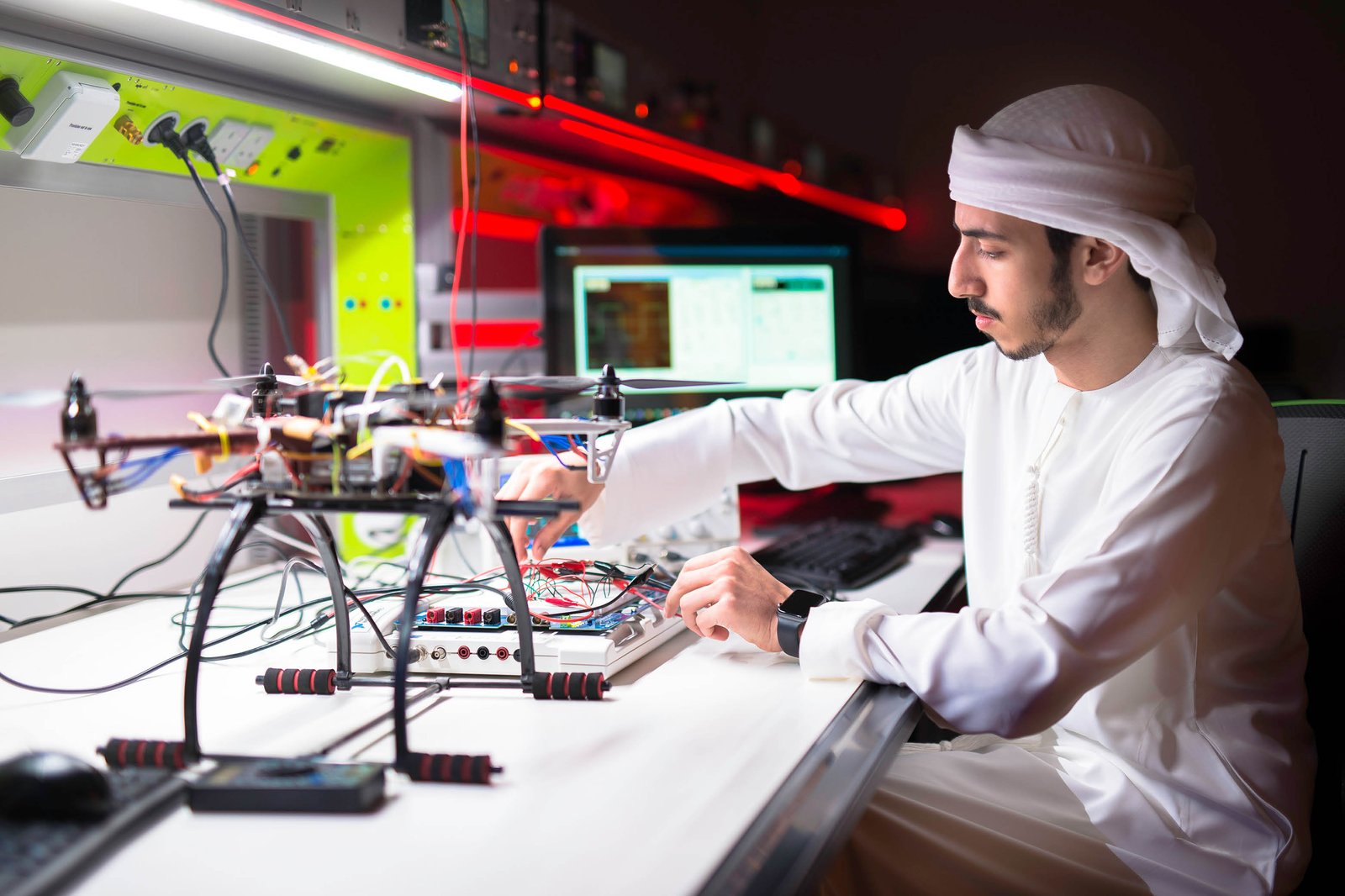
Another spinoff, Kumrah AI, specializes in high-speed neuromorphic technology and tactile AI. The aim is for complex industrial inspections, such as in aerospace, to be completed up to ten times faster and with precision. It is also, “part of the UAE’s efforts to build its own AI and robotics expertise,” says His Excellency Prof. Ebrahim Al Hajri.
The Emirati Reference Genome Project is a first for the Arab world, mapping over 421 million variants of the Emirati genome, paving the way for personalized treatment and early detection of disease, including diabetes and cancer.
For Khalifa University, the focus is on creating real-world tools, systems, and innovations in line with the UN SDGs including SDG 9, which aims to build resilient infrastructure, promote inclusive and sustainable industrialization, and foster innovation.
At the same time, the Khalifa University is advancing research in climate change and clean-energy technologies such as Solar Platform, which conducts tests under desert conditions to help advance clean-energy solutions.
“We are not just training the engineers of tomorrow; we are pioneering meaningful research, innovation, and partnerships today, to make sure the future holds up, for everyone,” says His Excellency Prof. Ebrahim Al Hajri. “What our future needs, we build here at Khalifa University.”
Khalifa University has developed and launched multiple satellites, including MySat-1, DhabiSat, MeznSat, and Light-1, contributing to the UAE’s growing space sector.