


Protect, restore and promote sustainable use of terrestrial ecosystems, sustainably manage forests, combat desertification, and halt and reverse land degradation and halt biodiversity loss
The Institute of Geo-Hydroinformatics (GHI) at Hamburg University of Technology is at the forefront of Climate-informed Engineering. The GHI is one of the pioneers of this concept and a world leader on the study of soil health, a discipline that is crucial to maintaining life on land.
The institute’s approach relies on groundbreaking data analysis and the novel insights that can be drawn from it.
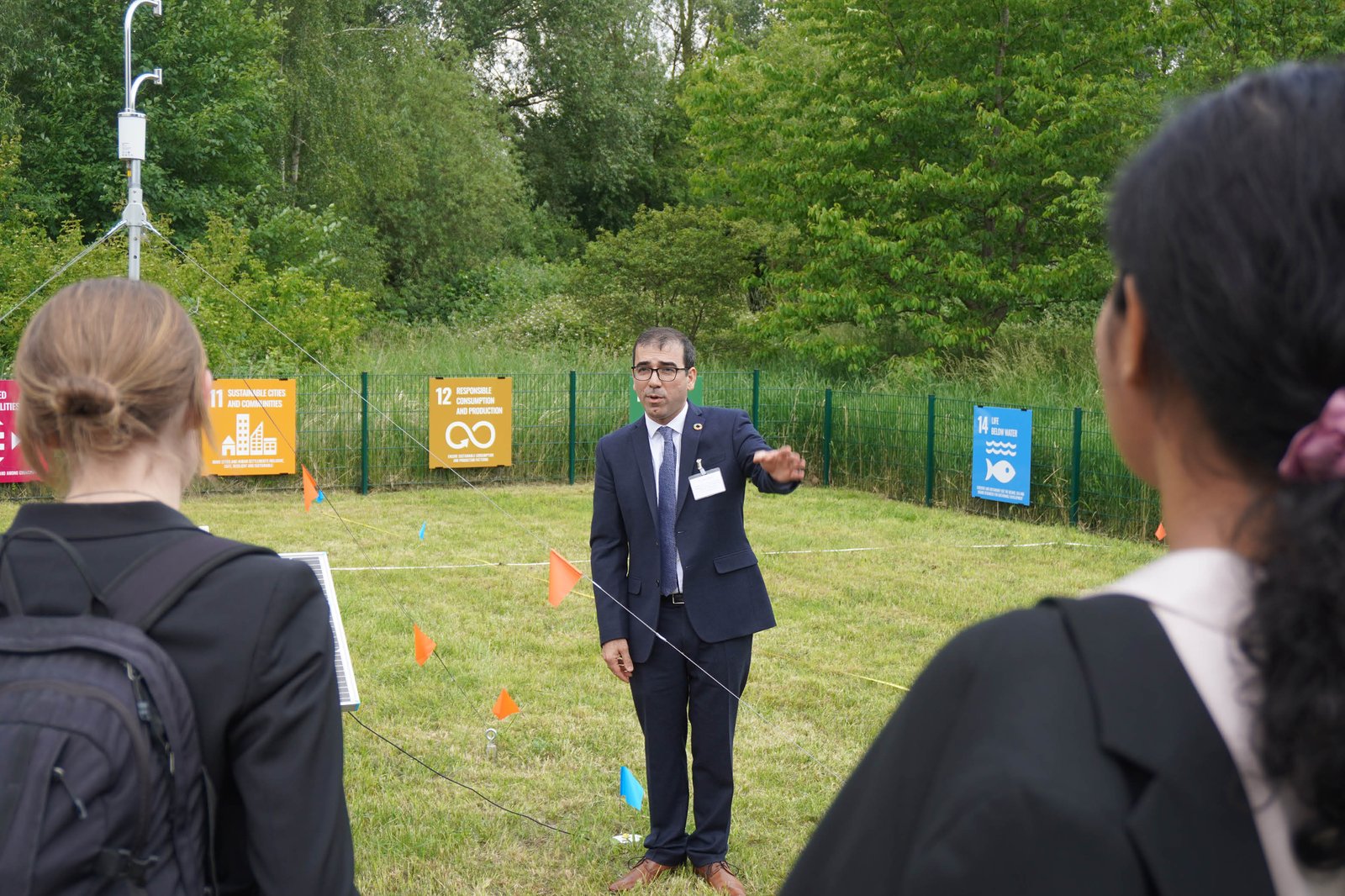
“By developing and implementing innovative measurement tools using cutting-edge sensing technologies and big data analytics, we provide increasingly accurate insights into the processes affecting life on Earth,” says Professor Nima Shokri, Director of the GHI.
Based at Hamburg University of Technology (TUHH), Germany, the GHI has around 25 staff, including technical and administrative personnel, PhD candidates, and postdoctoral researchers.
The GHI also hosts many academic visitors from higher education institutions around the world, from Princeton University and United Nations University to Imperial College London and the Max Planck Institute for Meteorology.
One example of the GHI’s research in practice is its work on predicting and recommending solutions to soil degradation. The institute is a preeminent authority on soil salinization – the process by which soil accumulates more salt. Salinization is a major contributor to soil degradation, which means understanding it is of paramount importance for sustainable land management.
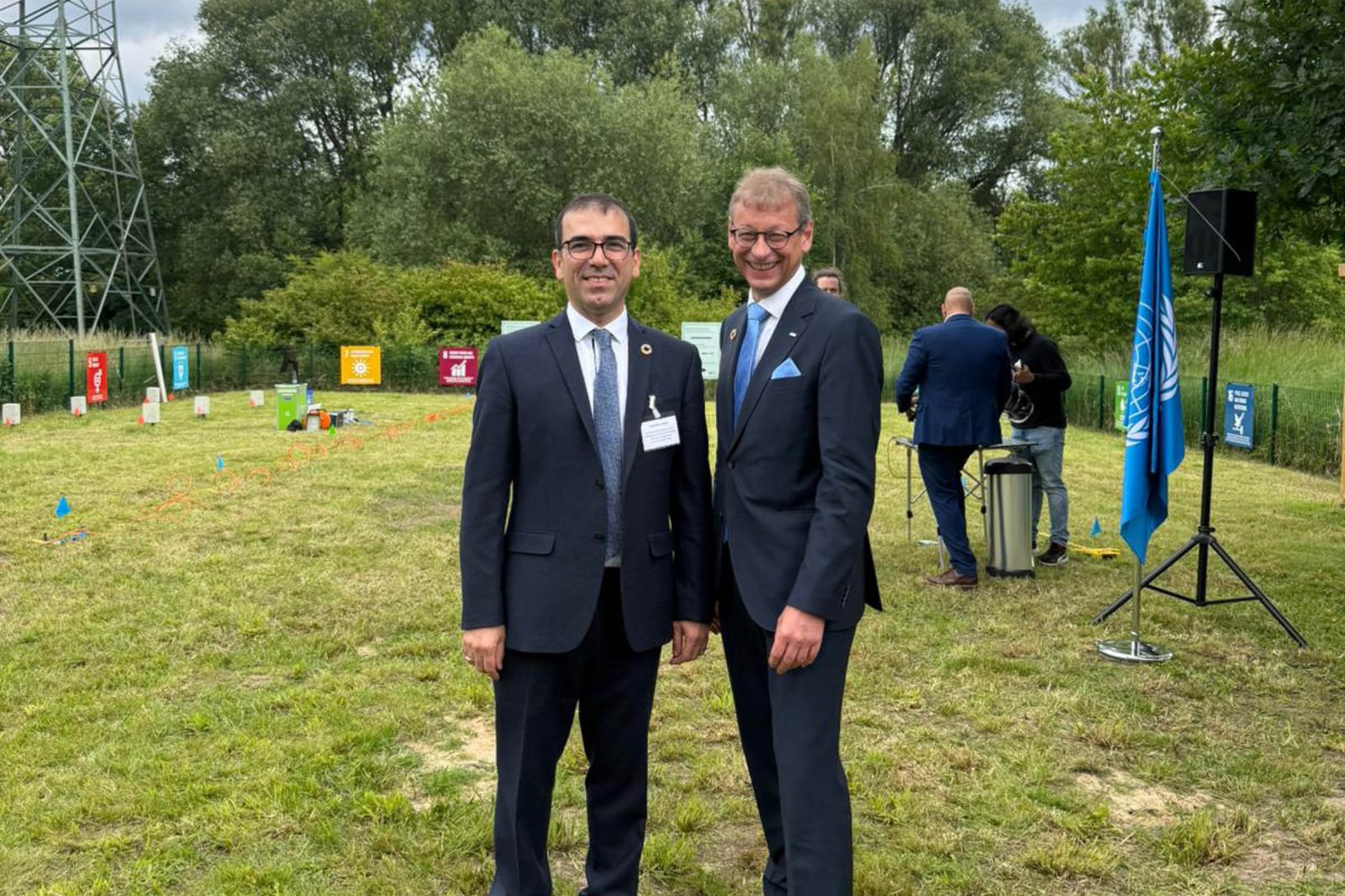
As a partner of the Horizon Europe-funded AI4SoilHealth project to create an open-access European-wide digital database to monitor and improve soil health, the GHI is developing AI-powered models to predict soil salinity and soil degradation across Europe. The aim is to create open access information that will help farmers across Europe make evidence-based decisions that improve soil health.
The application of GHI’s climate-informed AI-powered models demonstrates that data-driven solutions can provide governments, businesses, and individuals with increasingly accurate environmental information, which helps promote sustainable practices by farmers and growers.
The GHI’s innovative work to equip engineers with climate information and insights they need to make more environmentally conscious decisions supports SDG 15, to protect, restore, and promote sustainable use of terrestrial ecosystems.
However, for GHI, Climate-informed Engineering is not just about equipping engineers with tools; it also requires them to think about life on land, as well as engineering designs and solutions, in a holistic way.
“This interdisciplinary field helps engineers to use complex data from innovative climate models to develop new materials, processes, and sustainable technologies to tackle the challenges of the future,” says Bjorn Stevens, Director at the Max Planck Institute for Meteorology (MPI-M).
In 2025, Hamburg University of Technology, in collaboration with the MPI-M and United Nations University, received nearly €7 million in funding from the German Research Foundation (DFG) to expand its research on Climate-informed Engineering.