


Take urgent action to combat climate change and its impacts
Deep Sky is addressing the persistent legacy of atmospheric CO2 and the global shortage of large-scale, high-integrity carbon removal by building integrated infrastructure capable of delivering gigatonne-scale removal worldwide.
By remaining technology-agnostic and seeking to deploy the most efficient Direct Air Capture technologies available, Deep Sky’s carbon removal credits have become the most in-demand DAC offering in the carbon market.
“This new approach is not only world-leading, but also scalable,” says Alex Petre, Deep Sky CEO. “In the right conditions, we can go from breaking ground to removing carbon from the atmosphere and safely sequestering it in as little as a year.”
Headquartered in Montreal, Deep Sky is developing sites across Canada and globally. It partners with innovators such as Airbus and GE Vernova on their DAC technologies and has agreements with major carbon removal buyers, including Microsoft and the Royal Bank of Canada.
Deep Sky leverages Canada’s unique advantages for carbon capture: vast land, strong government support, abundant clean energy, and ideal geology for CO2 storage. Gases, CO2 in particular, are much more soluble and separable in cold environments. Meanwhile, the Western Canadian Sedimentary Basin features an extensive network of saline aquifers deep underground, with thick layers of impermeable rock to keep the carbon safely sealed.
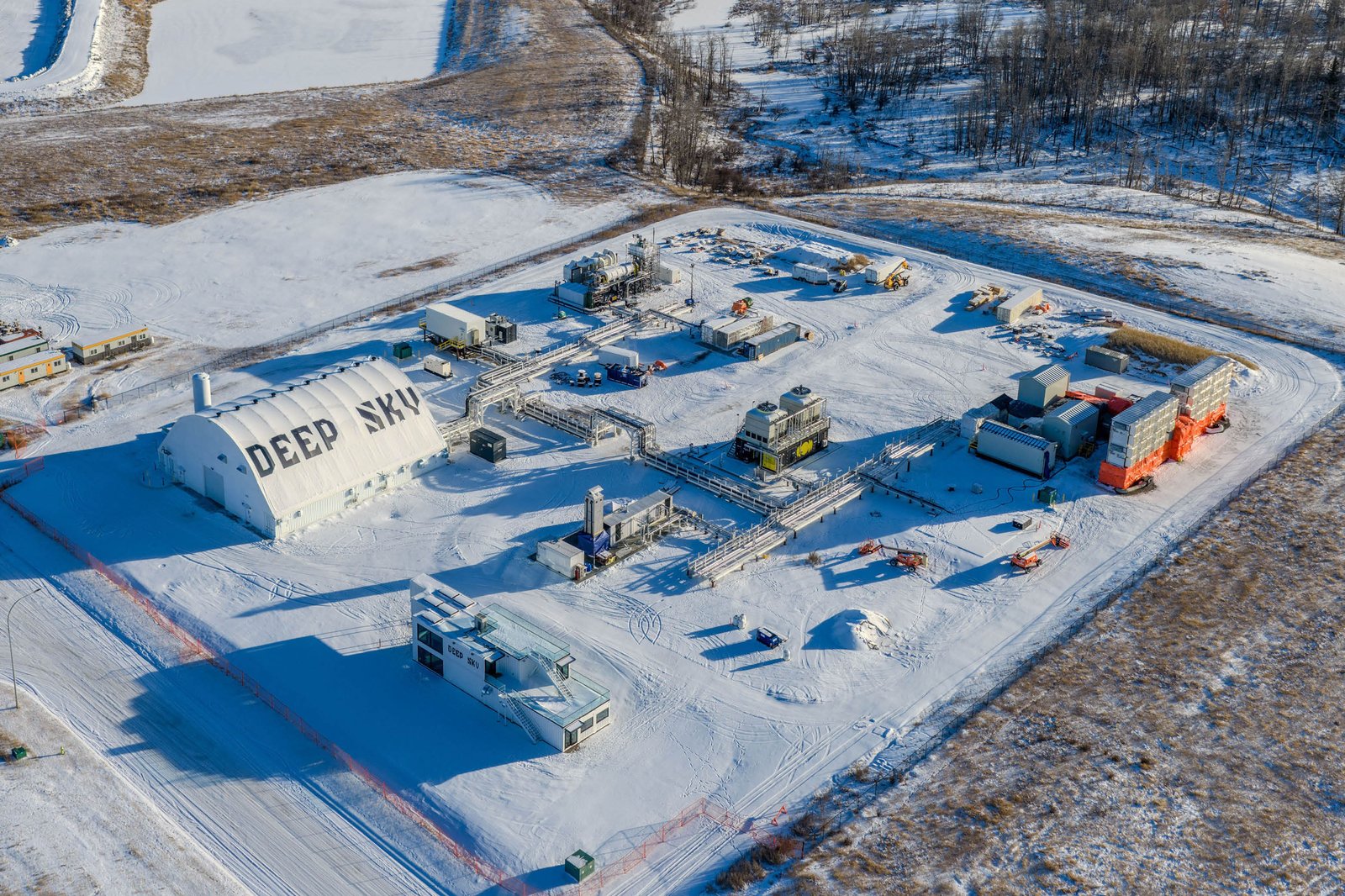
Deep Sky Alpha in Innisfail, Alberta, is the world’s first carbon removal innovation and commercialization center. It became operational in August 2025, only 12 months after the company acquired the five-acre site, with engineering support from BBA Consultants, accelerating the design and deployment of the facility. This agility, Deep Sky believes, will make its infrastructure viable for large-scale carbon sequestration in the future.
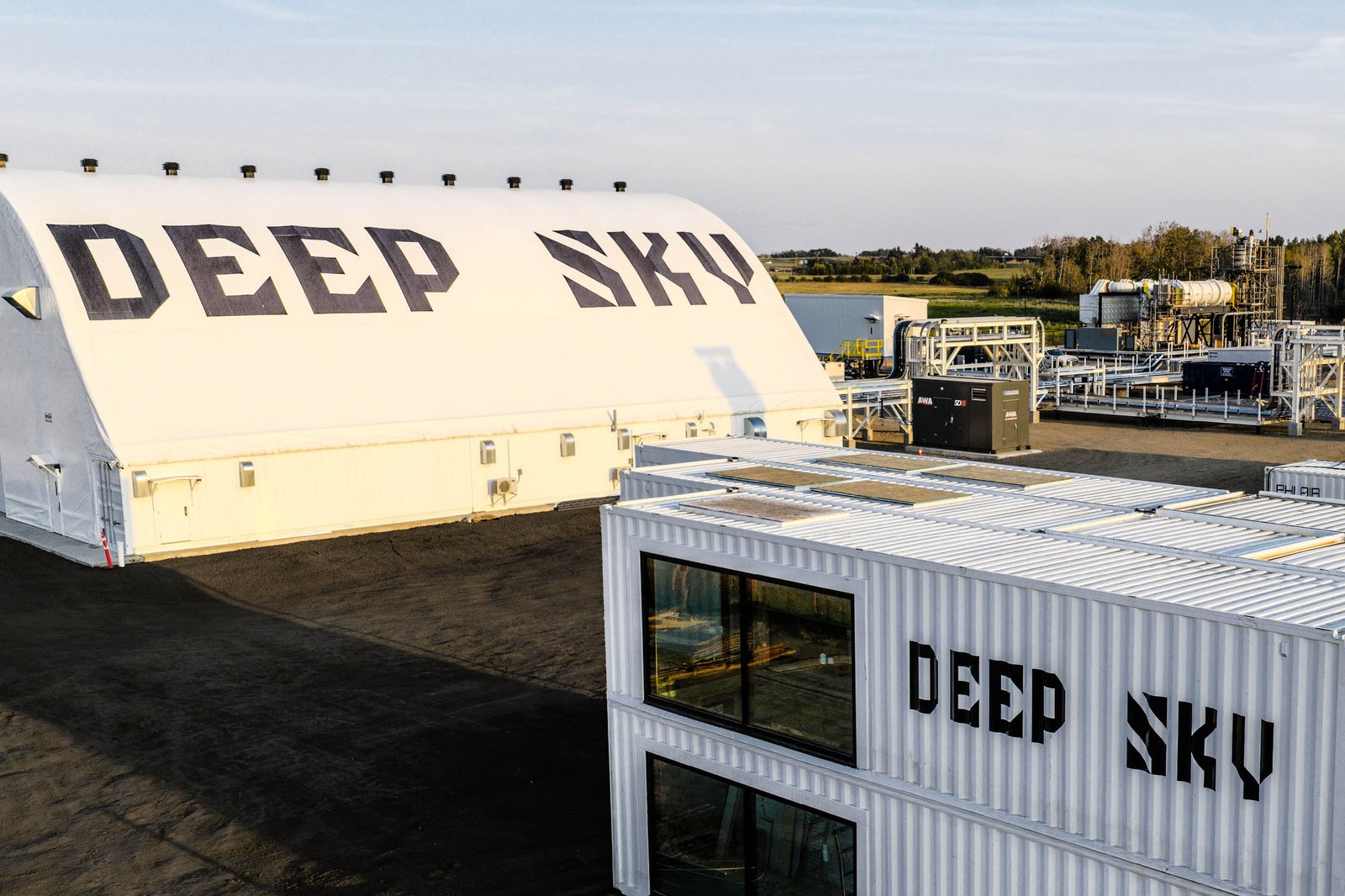
Furthermore, the Innisfail site runs on 100% solar energy, ensuring the carbon capture process does not rely on fossil fuels.
“Deep Sky Alpha has busted some of the myths around what carbon removal and sequestration really are,” says Petre. “We’ve shown that it is a safe process that can be quickly deployed, scaled, and integrated into a renewable closed loop, an extraordinary achievement that opens the door to lowering costs for the broader application of this technology.”
According to Deep Sky, the environmental impact of CO2 is visible within ten to 50 years, and the gas remains in the atmosphere for thousands of years. That is why the company aims to contribute to SDG 13 by taking urgent action to combat climate change and its impacts.
“Deep Sky is pioneering the bold, innovative engineering solutions needed to tackle what is a global problem,” says Petre. “Indeed, Deep Sky’s infrastructure is designed to deploy multiple technologies simultaneously across diverse climates, enabling rapid supply scale-up and cost reductions to meet growing enterprise carbon removal needs.”
Deep Sky Alpha aims to remove more than 3,000 tons of carbon dioxide from the air annually, using ten different technologies.