


Make cities and human settlements inclusive, safe, resilient and sustainable
Aretian Urban Analytics and Design combines high-level research and granular findings to support new thinking about urban and economic development.
Headquartered at Harvard in Cambridge, Massachusetts, the company draws on everything from complex mathematical modelling to public policy and machine learning to understand and design cities better. The result is Aretian’s City Digital Twin, a platform that helps architects, planners, communities, corporations, and cities solve today’s urban challenges.
The company also strives to unlock the economic potential in communities around the world. Its Atlas of Innovation Districts, for example, is a directory of the 50 most dynamic places in the US for research, development, and creativity, accompanied by data and analysis that demonstrates innovation’s wider benefits.
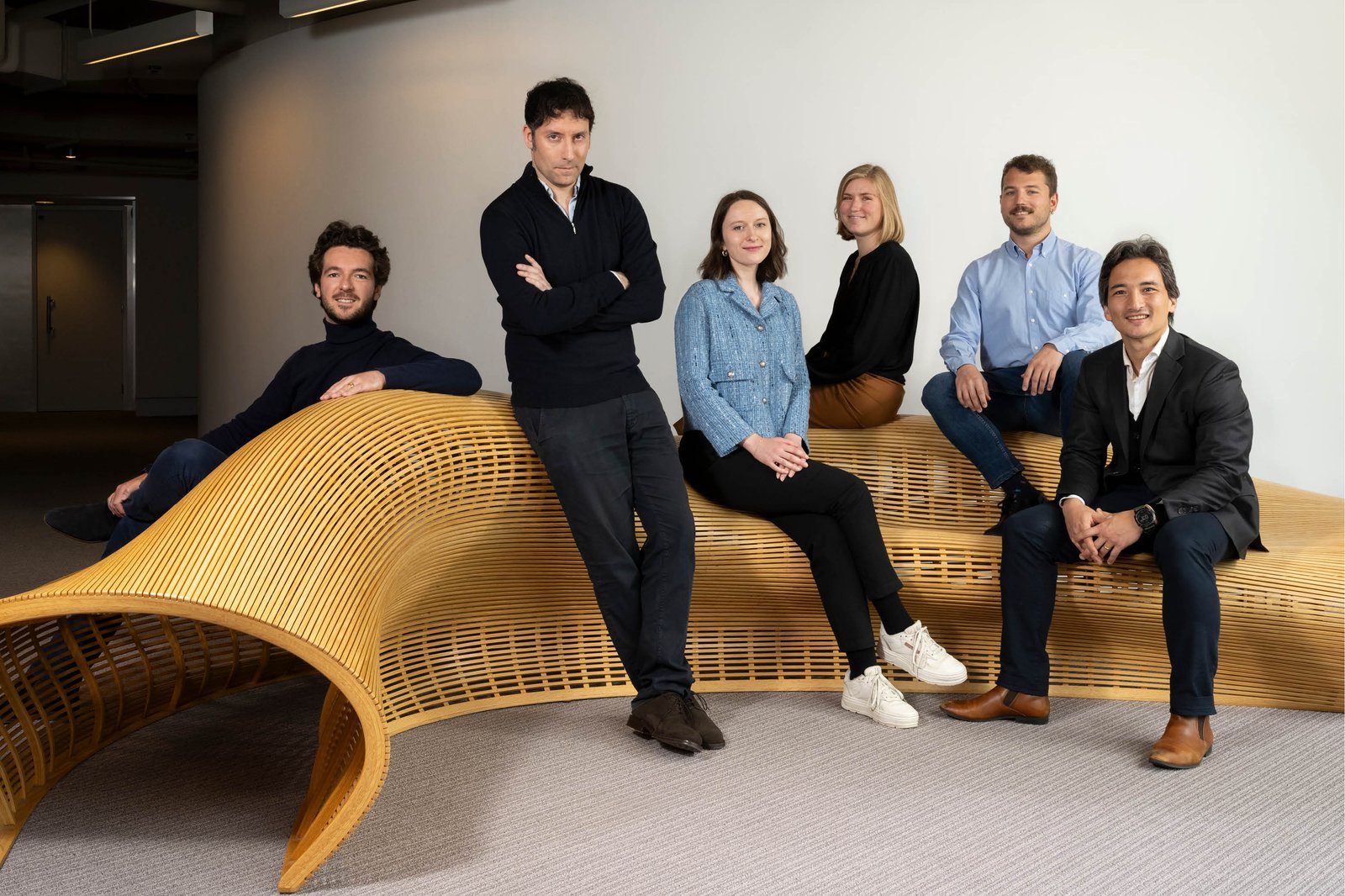
Aretian has its origins in the Harvard Innovation Labs. The company was founded in 2018 by Ramon Gras at the Harvard Graduate School of Design. Gras, now CEO at Aretian, is also a city science and urban design researcher at Harvard University.
“We felt that a number of the insights that were coming out of our research could be extremely valuable if transformed into a proper methodology that could be deployed at scale for both boutique urban design and masterplanning, as well as software development,” says Gras.
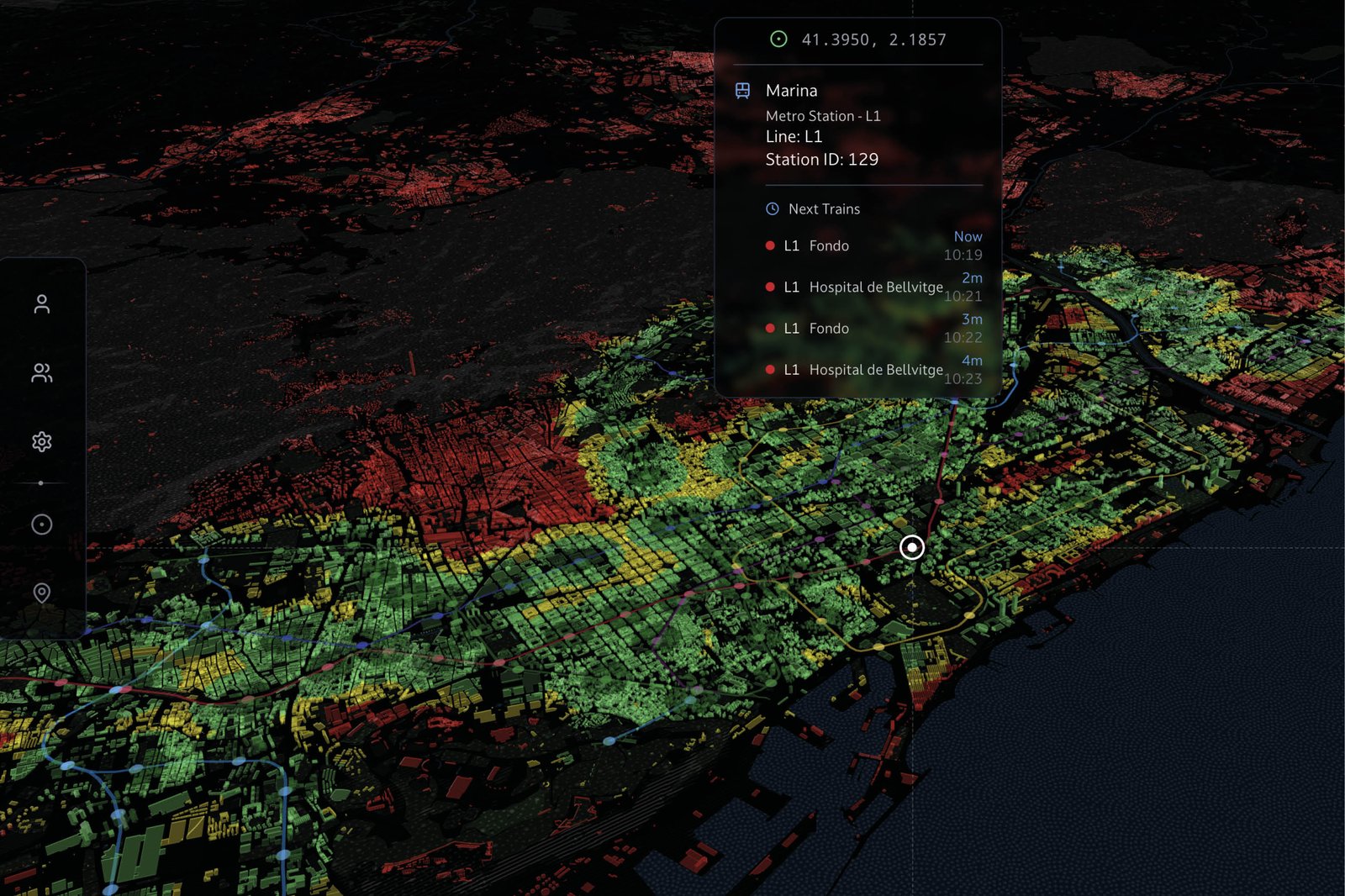
One of Aretian’s City Digital Twins is based on downtown Barcelona, creating a shared vision for the city, drilling down into each urban block with an unprecedented level of detail that can be applied to five key case studies.
The CDT first examined Barcelona’s future housing provision via an analysis of three quarters of a million parcels of land, with a view to building nearly 500,000 new homes by the middle of the century. The detail not only covers density and location, but also form and typology, and local land use.
Another case study looked at Barcelona’s industrial regions, and the logistical, infrastructural, and growth challenges they faced, while a third explored the city’s knowledge economy, bringing in data from universities, business hubs, and research bases. Public transport was also modelled, looking at ways to speed up safety and efficiency.
Finally, Aretian’s CDT was deployed to help set urban design standards and amenities.
Through its pioneering work on analysing contemporary urbanism, Aretian aligns with SDG 11, to make cities and human settlements inclusive, safe, resilient, and sustainable.
For Aretian, its City Digital Twin is the future of urban development, building ecosystems that are resilient, equitable, and prosperous. Ultimately, the approach is about capitalising on reachability.
“Using the latest tools at our disposal, we allow for a canvas of a City Digital Twin that is accessible for everyone,” says Elijah Munn, Senior Product Developer at Aretian.
According to Aretian’s Atlas of Innovation Districts, the top 50 districts in the US have around three million employees – one third of whom work in “innovation intensive activities”.